
Burst Pipe Water Damage In New York
One free call connects you with an independent local pro for burst pipe shutoff guidance, water extraction, and drying — 24/7, anywhere in New York.
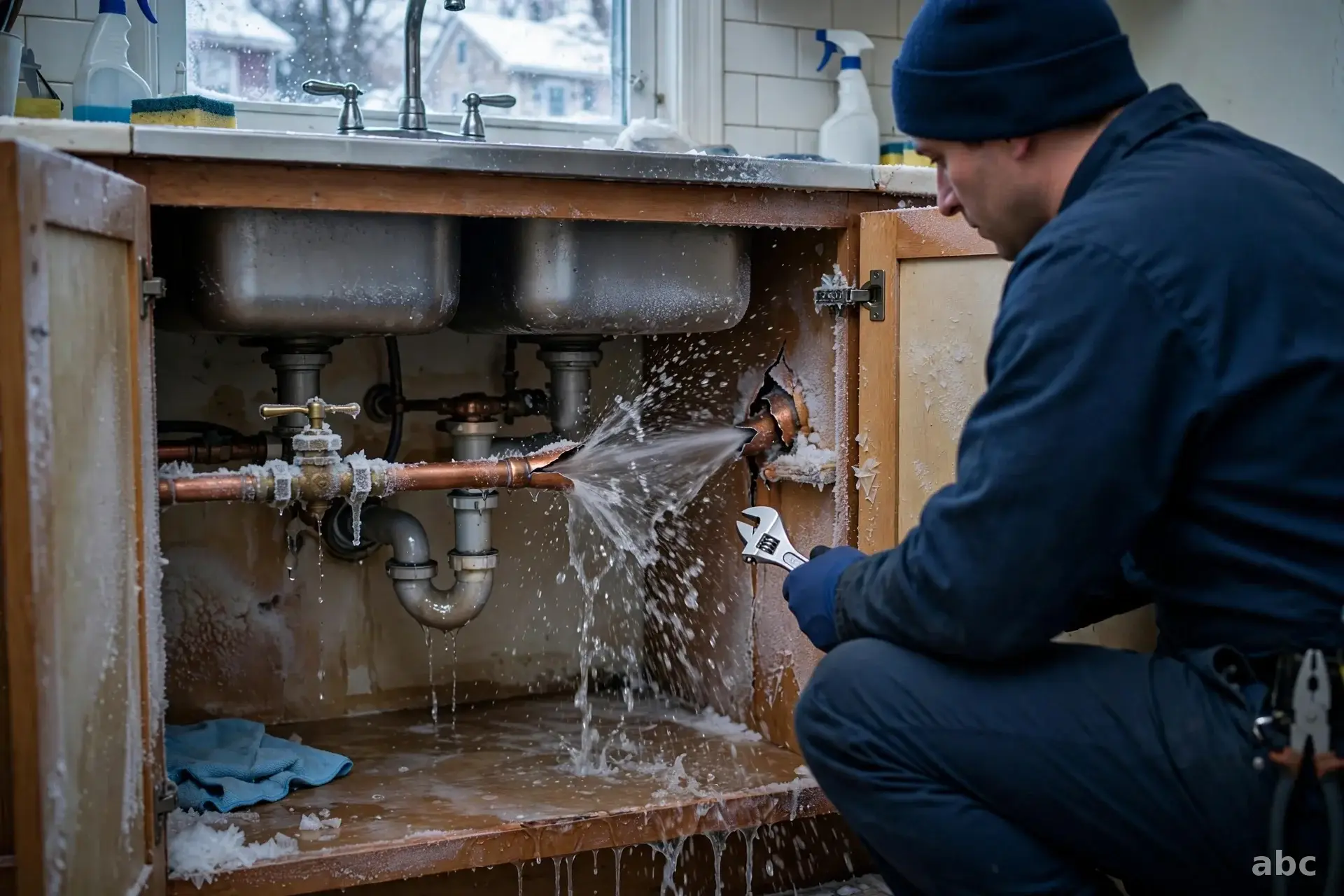
What Is Burst Pipe Water Damage?
You need this service when a pipe freezes and splits — usually discovered as a dead faucet on a bitter morning, a sudden loss of pressure, water pouring through a ceiling, or a flooded basement after a thaw. New York's older homes are especially vulnerable: original plumbing often runs through unheated crawl spaces, attics, and exterior walls where a multi-day cold snap does its worst. The flood frequently starts not when the pipe freezes, but when the ice plug thaws and full pressure hits the split.
This differs from Water Extraction, which covers the pumping step alone — burst pipe response starts earlier, with shutoff coaching on the call, and continues into drying and freeze-prevention advice. It also differs from Ceiling Water Damage Repair, which fixes where traveled water pooled overhead; here the focus is the rupture point and the rooms it flooded. Speed is everything: the EPA notes mold can begin growing on damp materials within 24 to 48 hours, so extraction in the first hours prevents most of the lasting harm.
| First Move | Shut off the main water valve if you safely can |
|---|---|
| Cause | Water expands as it freezes, splitting the pipe |
| Peak Season | December through February cold snaps |
| Drying Time | Several days of monitored drying after extraction |
| What's Usual | Shutoff help, extraction, drying, documentation — exact work depends on the provider and the damage |
What's Included In Burst Pipe Water Damage?
Usually included — the exact work depends on the provider and the damage.
Shutoff Guidance by Phone
The moment you call, the provider talks you through finding and closing your main water valve — stopping the flow before arrival is what keeps a bad flood from becoming a disaster.
Water Extraction
Truck-mounted extractors and submersible pumps pull standing water from floors, carpets, basements, and crawl spaces fast. Removing the bulk water quickly is the critical first step — it limits how far moisture spreads into walls, framing, and flooring.
Structural Drying
Industrial air movers and dehumidifiers dry soaked walls, subfloors, and wooden framing over several days. The provider returns to take fresh moisture readings and only removes the equipment once every surface tests dry.
Moisture Mapping
Pin and pinless meters map moisture behind walls, under flooring, and inside ceiling cavities along the water's path. Finding hidden dampness now prevents it from turning into a mold problem weeks after everything looks dry.
Claim Documentation
You receive a written account of the rupture source, every area affected, and the full drying record with moisture readings. This is exactly the documentation insurers ask for when you file a claim, organized and ready to send.
Freeze Prevention Tips
Before leaving, the provider walks you through cold-snap habits tailored to your home: which pipes run through unheated spaces, where to drip faucets during deep freezes, and what to check each fall before temperatures drop.
Signs You Need Burst Pipe Water Damage
Faucet Goes Dry in a Freeze
A faucet that produces nothing on a freezing morning — the pipe is likely frozen and may burst as it thaws.
Unexplained Puddles
Puddles forming under sinks, along baseboards, or across the basement floor with no obvious source — especially after a cold night.
Banging Pipes
Banging, whistling, or gurgling in the walls when water runs — pressure is building somewhere.
One Wall Far Colder Than the Rest
One section of wall or floor that feels much colder than the rest, hinting at an exposed run.
Sudden Pressure Loss
A sudden loss of water pressure at every fixture, suggesting a major breach in the line.
Damp Drywall After a Cold Snap
Damp drywall or a musty smell appearing days after a cold snap — the burst already happened.
Seeing one of these? Call (800) 110-0003 now — a local pro typically arrives in 30–45 minutes.
How Burst Pipe Water Damage Works
- 1Shutoff Guidance
On the call, the provider guides you to your main shutoff valve and talks you through closing it safely — stopping the water is step zero.
- 2Extract Water
On arrival, the provider's pumps and truck-mounted extractors remove standing water from every affected room, basement, and crawl space — working top to bottom so nothing gets missed.
- 3Dry Structure
Air movers and dehumidifiers run for several days while meters track moisture in walls, floors, and wooden framing. Equipment stays in place until every reading confirms the structure is truly dry.
- 4Cold-Snap Prevention Tips
The provider points out your freeze-prone pipes and shares practical cold-snap habits — dripping faucets, steady heat, sealed drafts — so the next deep freeze doesn't repeat the story.
How long does it take? Extraction starts on the first visit, usually within the hour of arrival. Structural drying then runs three to five days for a typical home, with the provider checking moisture readings before equipment is removed — no promises, just measured progress.
Winter Weather And Cold Wave Risk Across New York
Why burst pipe water damage calls spike in certain counties — backed by FEMA and NOAA data.
County risk rating — FEMA National Risk Index, Dec 2025
County risk rating — FEMA National Risk Index, Dec 2025
County risk rating — FEMA National Risk Index, Dec 2025
County risk rating — FEMA National Risk Index, Dec 2025
County risk rating — FEMA National Risk Index, Dec 2025
NOAA's climate data shows New York cold snaps routinely drive temperatures far below freezing for days — the exact conditions that freeze pipes in unheated spaces. (NOAA)
Freeze-thaw cycles are hardest on older plumbing: New York's aging housing stock means many homes still run original supply lines through cold zones. (NOAA)
Winter storm events that knock out heat leave pipes defenseless — a cold house can freeze plumbing within hours during a deep freeze. (NOAA)
Why Call abc For Burst Pipe Water Damage?
A burst pipe is the fastest-moving water emergency a New York winter produces — hundreds of gallons while you search for the shutoff. A referral call connects you with a local pro who talks you through stopping the flow on the phone, then arrives with extraction gear. Fast water removal now means drying, not demolition, later.
Nights, weekends, holidays — a real person picks up.
Toll-free number. No charge to reach a local pro.
47 cities covered from one memorable number.
Connected with local pros who do the work.
Apartments, houses, offices, retail, restaurants.
Typical arrival window once you're connected.
What New Yorkers Say
Burst Pipe Water Damage Tips: What To Do (And Avoid)
Find Your Shutoff Before Winter
Before the first freeze arrives, find your main water shutoff and make sure the valve actually turns. A stuck or painted-shut valve in an emergency turns a manageable leak into a disaster.
Keep Heat Steady
Keep the thermostat steady, at least in the mid-60s, even when you're traveling for the holidays. A slightly higher heating bill is always cheaper than coming home to a flooded house.
Drip Vulnerable Faucets
During deep freezes, let faucets on exterior walls drip slowly, both hot and cold lines. Moving water resists freezing far better than standing water, and the water cost is tiny.
Open Cabinet Doors
Open cabinet doors under sinks on outside walls so warm room air can reach the pipes behind them. It looks odd and wastes a little heat, but it works.
Seal Drafts Near Pipes
Seal drafts around pipe penetrations in crawl spaces, attics, and garages with caulk or foam insulation. Blasts of cold air on copper or PEX lines are the enemy in January.
Winterize Outdoor Spigots
Drain and shut off outdoor hose bibs each fall, then leave them open through winter. A frozen spigot can burst the supply line deep inside the wall where you can't see it.
Don't Do This
- Don't use an open flame or heat gun to thaw a pipe — uneven heat can burst it or start a fire.
- Don't ignore a faucet that goes dry on a freezing morning; a frozen pipe is often hours from bursting.
Pipe Burst Right Now?
A burst pipe can release hundreds of gallons in hours — through walls, across floors, and down into ceilings. The first minutes belong to you: shut off the main valve if you safely can, then call. A local pro typically arrives in 30–45 minutes to extract the water and start drying before the damage spreads to the structure.
Available In 47 New York Cities
Popular Right Now
Show All 47 Cities (A–Z)
Burst Pipe Water Damage Questions, Answered
Turn the main water valve off first, if you can reach it safely. Then move valuables and electronics away from the water, avoid any area with standing water near outlets, and call (800) 110-0003. A local pro typically arrives in 30–45 minutes to extract water and begin drying.
Warning signs include a sudden drop in water pressure, the sound of running water when every tap is off, water stains spreading on walls or ceilings, puddles where there shouldn't be any, and a water bill that jumps for no reason. Any one of these deserves a prompt call.
Usually, yes — most homeowners policies cover sudden, accidental water damage from burst pipes, including the resulting repairs. Damage from long-term leaks or neglected maintenance is typically excluded. Photograph everything and keep the provider's report for your adjuster. File promptly, and ask the adjuster exactly which documents they need so nothing delays your claim.
Pipes freeze when exposed to sustained sub-freezing temperatures — in unheated crawl spaces, attics, exterior walls, and garages. When water freezes it expands, and the pressure spike splits the pipe, often at a weak joint. The flood usually starts when the ice thaws.
Keep the heat at a steady temperature even when you're away, let vulnerable faucets drip during deep freezes, open cabinet doors under sinks on exterior walls, and seal drafts near pipes. Insulating exposed runs in crawl spaces and attics helps too — prevention is a weekend project, not a major expense.
Yes — that's exactly what the emergency response covers. The provider gives shutoff guidance by phone, then arrives with extraction equipment, removes the standing water from every affected area, sets drying gear, and documents moisture levels throughout the job for your records.
It varies with how much water escaped and how many rooms it reached. Extraction happens on the first visit; structural drying then runs several days while the provider checks readings. You'll get an honest, realistic timeline once the provider sees the full extent — never a guess over the phone.
Winter Burst Your Pipe? Get the Water Out Fast
One free call connects you with an independent local pro for burst pipe water damage — shutoff guidance, extraction, and drying, 24/7 across New York. A local pro typically arrives in 30–45 minutes.
(800) 110-0003Sources & methods: how we research and verify everything on this site →