
Water Damage Restoration In New York
One free call connects you with an independent local pro for complete drying, cleanup, and restoration — 24/7, anywhere in New York.
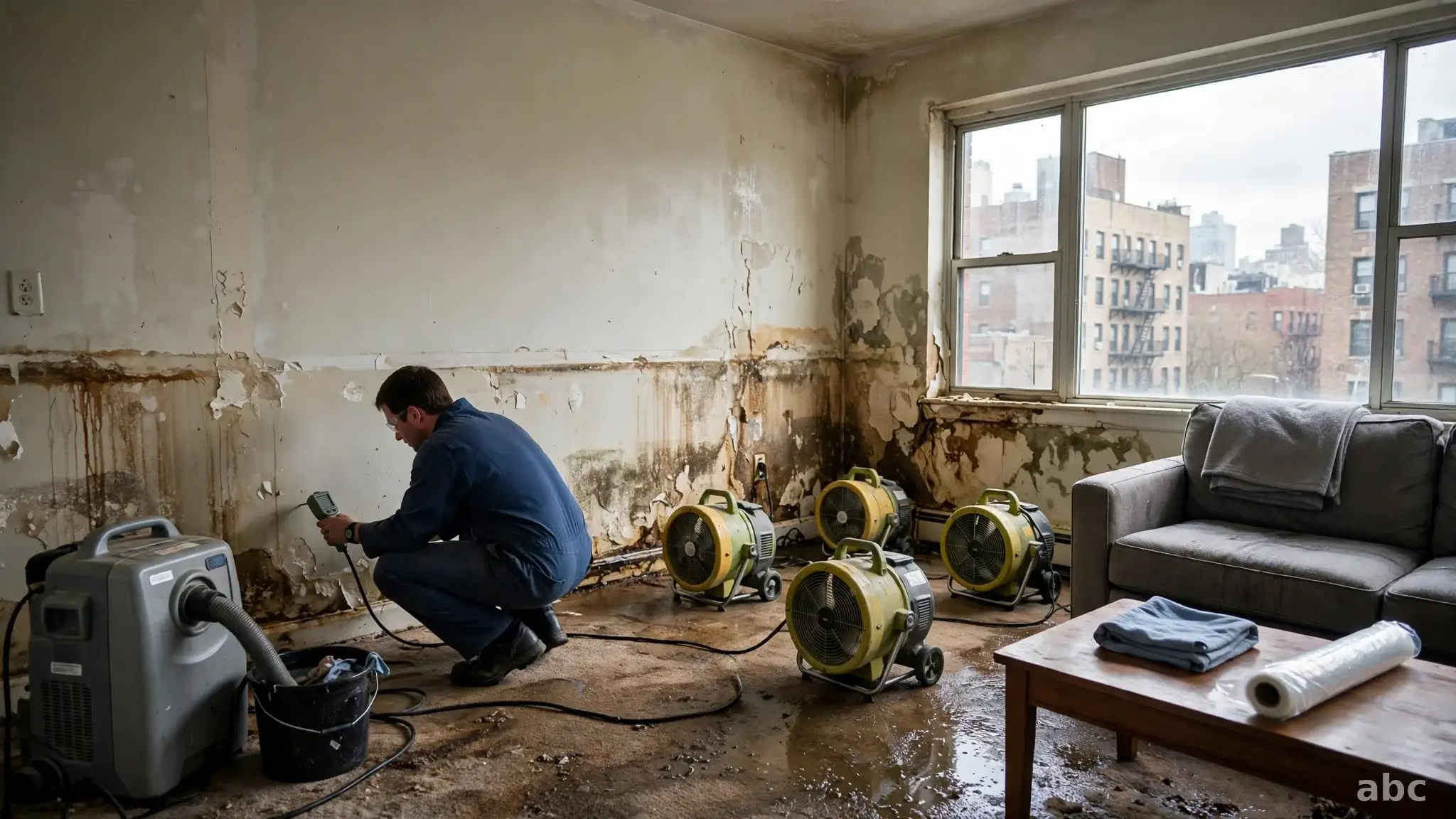
What Is Water Damage Restoration?
You need water damage restoration whenever water goes where it should not and keeps spreading. In New York that often means a burst pipe soaking a finished basement in February, a washing machine hose failing behind a laundry closet, a roof leak discovered as a growing ceiling stain after a nor'easter, or groundwater seeping through foundation walls after days of heavy rain. Even a slow drip under a sink can rot a cabinet and subfloor over weeks. If flooring feels spongy, paint bubbles, or a musty smell appears where none existed before, water has already been at work.
Restoration is the full job, not just one phase. Unlike Water Extraction, which focuses on removing standing water, restoration continues through drying, cleaning, and repairs until the space is verified dry. And unlike a Water Damage Inspection, which only finds and maps moisture, restoration fixes what the moisture damaged. Speed matters because damage compounds: the EPA notes that mold can begin growing on damp drywall and wood within 24 to 48 hours, so every day of delay can turn a drying job into a mold remediation project.
| First step | Standing water removal |
|---|---|
| Typical drying time | 3–5 days for most homes |
| Moisture checks | Daily readings until dry |
| Availability | 24/7, including holidays |
What's Included In Water Damage Restoration?
Usually included — the exact work depends on the provider and the damage.
Standing Water Removal
Truck-mounted extractors and submersible pumps clear water from floors, carpets, basements, and crawl spaces. Removing the bulk of the water first is what stops it wicking higher into drywall and keeps the drying phase short.
Structural Drying
Commercial air movers and low-grain dehumidifiers dry walls, subfloors, and framing in place wherever possible. The provider takes moisture readings each day and adjusts the setup until every material meets a dry standard. Learn more about Structural Drying.
Structural Drying
Moisture Detection
Thermal imaging cameras and penetrating moisture meters find water hiding behind walls and under flooring. Mapping the full extent of moisture before drying starts is how the provider avoids missing a wet cavity that could grow mold later. See Water Damage Inspection.
Water Damage Inspection
Dehumidification and Airflow
Dehumidifiers pull moisture from the air while directed airflow moves damp air out of wall cavities and across wet surfaces. Controlling humidity during drying protects unaffected rooms and keeps the process on schedule.
Cleaning and Sanitizing
Hard surfaces, framing, and salvageable contents are cleaned and treated after water exposure. For gray or black water events the provider uses appropriate disinfectants, since that water can carry bacteria.
Drying Documentation
Daily moisture readings and photos create a record of the drying process. This documentation supports insurance claims and confirms the job was finished to a verified dry standard rather than guesswork.
Signs You Need Water Damage Restoration
Musty Odor
A persistent earthy smell means something is staying damp — often inside a wall or under flooring where you cannot see it.
Stains on Ceilings
Yellow-brown rings or spreading stains point to water above. If the ceiling sags or bulges, stay clear — it can collapse.
Safety: Stay out from under sagging or bulging ceilings.
Damp Basement Walls
Dark patches, efflorescence, or a clammy feel on foundation walls signal seepage that will keep returning after every storm.
Cold Damp Spots
A wall or floor section that feels noticeably colder and damper than its surroundings often hides trapped moisture.
Unexplained Dripping Sounds
Hearing drips or running water when every tap is off usually means a supply line or drain is leaking inside the structure.
Warped or Buckled Flooring
Hardwood that cups or laminate that lifts has absorbed water from below — the subfloor underneath needs drying too.
Seeing one of these? Call (800) 110-0003 now — a local pro typically arrives in 30–45 minutes.
How Water Damage Restoration Works
- 1Assess
The provider inspects the property, identifies where the water came from, and maps moisture with meters and thermal imaging so no hidden wet area gets missed before work begins.
- 2Extract
Pumps and truck-mounted extractors remove standing water from floors, carpets, and basements. Getting the bulk water out quickly limits how far moisture wicks into walls.
- 3Dry
Air movers and dehumidifiers are placed to dry walls, subfloors, and framing, with moisture readings taken daily until each material reaches a confirmed dry standard.
- 4Restore
Damaged drywall, flooring, and trim are repaired or replaced. A final round of moisture checks verifies the space is truly dry before the drying equipment is removed.
How long does it take? Most homes take 3–5 days of active drying after extraction; larger or heavily saturated losses take longer. Equipment stays in place until moisture readings confirm every material is dry — drying is never rushed.
Water Damage Risk Across New York
Why water damage restoration calls spike in certain counties — backed by FEMA and NOAA data.
County risk rating — FEMA National Risk Index, Dec 2025
County risk rating — FEMA National Risk Index, Dec 2025
County risk rating — FEMA National Risk Index, Dec 2025
County risk rating — FEMA National Risk Index, Dec 2025
County risk rating — FEMA National Risk Index, Dec 2025
Suffolk County alone has received 19 FEMA flood-related disaster declarations, with Nassau and Westchester each at 17 (Source: FEMA OpenFEMA).
Counties in the service area average 45.5 to 48.3 inches of precipitation per year, so roofs, basements, and foundations take a yearly beating (Source: NOAA).
Mold can begin growing on damp drywall and wood within 24 to 48 hours of water exposure (Source: EPA).
Why Call abc For Water Damage Restoration?
Water damage touches every part of a home — structure, finishes, air quality — which is why one coordinated response matters. Calling abc connects you with an independent local professional who handles the full process, from the first moisture reading to the final dry check, any hour of the day or night.
Nights, weekends, holidays — a real person picks up.
Toll-free number. No charge to reach a local pro.
47 cities covered from one memorable number.
Connected with local pros who do the work.
Apartments, houses, offices, retail, restaurants.
Typical arrival window once you're connected.
What New Yorkers Say
Water Damage Restoration Tips: What To Do (And Avoid)
Shut Off Power If Safe
If water is near outlets, appliances, or the breaker panel, switch off electricity to the affected area first — but never touch a wet panel or stand in water to do it.
Act Within the First Hours
Water keeps spreading until extraction begins, so call as soon as you discover damage. Early action often means the difference between drying and tearing out.
Photograph Everything First
Take clear photos and short videos of every affected room before anything is moved or cleaned up. Dated images make the insurance claims process far smoother later.
Protect Yourself From Dirty Water
Wear rubber boots and gloves around water of unknown origin, and keep children and pets away from it until the provider assesses the contamination level.
Stop the Source If You Can
For plumbing leaks, turn off the nearest supply valve or the main shutoff if you know where it is. For roof leaks, place a bucket — do not climb up during rain.
Ventilate When Weather Allows
On dry days, open windows and run fans to move humid air out while you wait for the provider. Skip this step during rain or high humidity.
Don't Do This
- Don't use a household vacuum on standing water.
- Don't wait to see if it dries on its own.
- Don't enter rooms with sagging ceilings.
Water Spreading Through Your Home Right Now?
Active water damage gets worse by the hour — it wicks into drywall, swells subfloors, and feeds mold. If water is spreading, don't wait to see how bad it gets. One call connects you with a local pro who can start extraction fast.
Available In 47 New York Cities
Popular Right Now
Show All 47 Cities (A–Z)
Water Damage Restoration Questions, Answered
Cost depends on how much area is affected, the water category, and how long materials stayed wet. A small clean-water incident costs far less than a large contaminated flood requiring tear-out. The provider assesses the damage on arrival and explains pricing before work begins — the call itself is always free.
Most homes need 3 to 5 days of active drying after the standing water is extracted, with daily moisture readings guiding the schedule. Larger losses or sewage contamination take longer. Equipment stays until every material tests dry — the process is never rushed, since damp materials grow mold.
Many policies cover sudden, accidental water damage — like burst pipes or appliance failures — but exclude long-term leaks, neglect, and flooding, which needs separate flood insurance. Document everything with photos, keep receipts, and ask the provider for the moisture reports adjusters typically request.
Often yes, if the damage is contained to one area and the water is clean. Widespread flooding, sewage contamination, or extensive equipment noise may make staying impractical. The provider can advise based on what they find during the initial assessment.
It starts with assessment and moisture mapping, then standing water extraction, then structural drying with air movers and dehumidifiers, and finally cleaning and repairs. Moisture readings are taken throughout, and equipment is only removed once every affected material verifies as dry.
Yes. Offices, retail spaces, restaurants, and rental properties face the same burst pipes, appliance failures, and storm leaks as homes do. The provider can schedule work around business hours where possible and supplies the detailed documentation that commercial insurance claims usually require.
A local pro typically arrives in 30–45 minutes after you're connected, day or night. Actual timing depends on your location, traffic, and current demand, so the provider confirms an ETA when you call. Mention active flooding or sewage and your call gets priority.
If safe, stop the source — shut the main valve for plumbing leaks — and move valuables away from the water. Avoid standing water near electricity and photograph everything. Then call (800) 110-0003 so a local pro can begin extraction before the damage spreads further.
Get Your Home Dry Again
Water damage only gets worse with time. Call (800) 110-0003 now and get connected with an independent local restoration pro — 24/7, anywhere in New York.
(800) 110-0003Sources & methods: how we research and verify everything on this site →