
Commercial Water Damage Restoration In New York
One free call connects you with an independent local pro for commercial water damage — after-hours scheduling, 24/7, anywhere in New York.
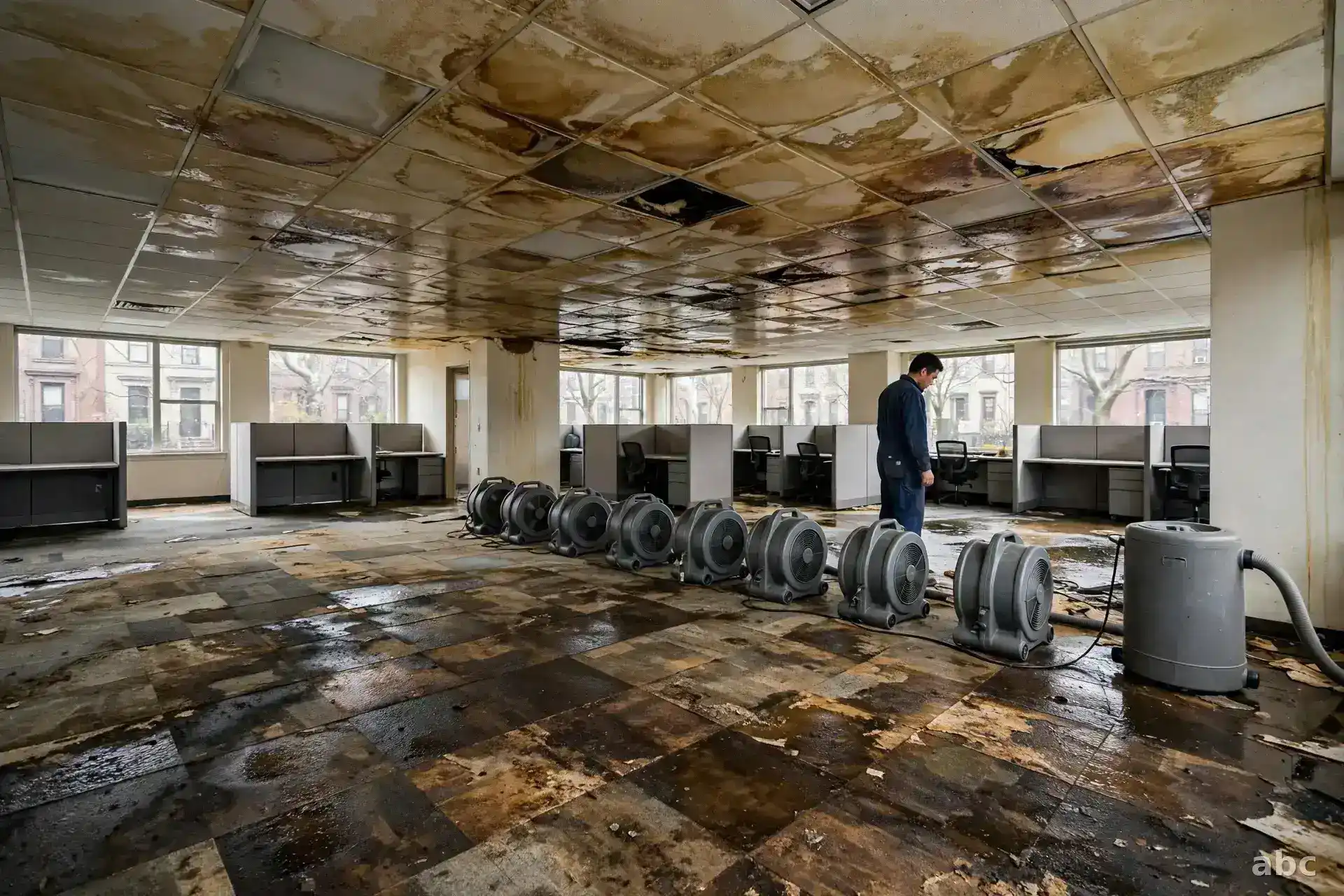
What Is Commercial Water Damage Restoration?
Water finds businesses at the worst times: a pipe bursts over a weekend and Monday starts with soaked carpet and warped flooring. A roof leak drips through ceiling tiles onto retail displays. A restaurant's water heater fails overnight and the kitchen opens to standing water. Sprinkler malfunctions, HVAC condensation lines, and storm-driven rain through loading docks all hit commercial spaces hard. Because every closed hour costs revenue, commercial jobs are scoped for speed from the first phone call — and the provider plans for it.
Commercial restoration differs from standard Water Damage Restoration, which is geared toward homes and their contents, and from Structural Drying, which focuses purely on the science of removing moisture from building materials. Here the job wraps extraction, drying, and documentation into one plan built around your business hours. Speed matters doubly: EPA guidance says mold can start within 24 to 48 hours on damp surfaces, and every day closed is a day of lost revenue. Fast, organized response protects both the building and the bottom line.
| Scheduling | After-hours and weekend work available |
|---|---|
| Documentation | Moisture logs and reports for insurers |
| Typical drying time | 3–7 days depending on building size |
| Priority | Minimal downtime for your business |
What's Included In Commercial Water Damage Restoration?
Usually included — the exact work depends on the provider and the damage.
After-Hours Scheduling
Work is usually scheduled around your operations — the exact arrangement depends on the provider and the damage. Evenings, nights, and weekends keep your doors open while drying runs — whatever keeps revenue flowing.
High-Capacity Extraction
Truck-mounted and portable extractors remove standing water from large floor areas, carpet tiles, and hard surfaces quickly. These machines move hundreds of gallons per hour, shrinking the extraction phase from days to hours.
Discreet Drying Setup
Air movers and dehumidifiers are placed to dry the space while staying out of the way of staff and customers. Equipment is tucked along walls and in closed zones so daily operations continue with minimal visual clutter.
Moisture Mapping
Thermal imaging and meters locate hidden moisture in walls, ceilings, and subfloors so nothing is left damp. The resulting map guides equipment placement and becomes part of your insurance documentation package.
Insurance-Ready Documentation
Daily moisture readings, photos, and equipment logs give your insurer a clear record of the work performed. Adjusters expect this level of detail on commercial claims, and it speeds up the settlement process considerably.
Odor Control
Air scrubbers and deodorizing treatments address musty smells so the space is pleasant when you reopen. Hydroxyl generators and HEPA air scrubbers break down odor molecules rather than covering them with fragrance.
Signs You Need Commercial Water Damage Restoration
Water Stains on Ceiling Tiles
Brown rings or sagging tiles signal a roof leak or pipe issue above — and the next rain makes it worse.
Musty Odor in the Building
A persistent damp smell in offices or stockrooms means moisture is hiding somewhere it should not be.
Safety: If the smell is strong, limit staff access until a pro checks it.
Buckling or Warped Flooring
Wood, laminate, or vinyl that lifts or ripples has absorbed water and needs professional drying.
Spike in the Water Bill
An unexplained jump in usage often points to a hidden leak running behind walls or under slabs.
Mold Spots in Storage Areas
Dark spots on drywall or inventory packaging mean moisture has been present for a while.
Standing Water After Storms
Pooled water near entrances, docks, or low spots after rain can seep under doors and into flooring.
Seeing one of these? Call (800) 110-0003 now — a local pro typically arrives in 30–45 minutes.
How Commercial Water Damage Restoration Works
- 1Assess
The provider walks the property, maps moisture with meters and thermal imaging, and pinpoints the water source and every affected area before work begins the same day.
- 2Plan Around Operations
You and the provider set a work schedule together — after hours, in zones, or phased across departments — so the business keeps running while restoration proceeds.
- 3Extract & Dry
Standing water comes out with high-capacity extraction equipment, then air movers and dehumidifiers dry the structure steadily over several days of monitored drying until readings confirm progress.
- 4Document
Daily moisture readings, photos, and a final verification report give you a complete file for your insurer and your own records long after the job.
How long does it take? Most commercial drying jobs run three to seven days depending on the size of the space and how long materials were wet. Larger losses take longer. The provider sets expectations after the assessment — and phased scheduling means parts of your business can often reopen while drying continues elsewhere.
Water Damage Risk Across New York
Why commercial water damage restoration calls spike in certain counties — backed by FEMA and NOAA data.
County risk rating — FEMA National Risk Index, Dec 2025
County risk rating — FEMA National Risk Index, Dec 2025
County risk rating — FEMA National Risk Index, Dec 2025
County risk rating — FEMA National Risk Index, Dec 2025
County risk rating — FEMA National Risk Index, Dec 2025
Nineteen FEMA flood-related disaster declarations have hit Suffolk County alone — and commercial districts flood right alongside residential streets. (Source: FEMA OpenFEMA Disaster Declarations)
About 82% of flash-flood and severe-storm events in the region strike June through September, making summer the peak season for roof leaks and flooded loading areas. (Source: NOAA Storm Events Database, 2021–2024)
The EPA notes that mold can begin growing on damp building materials within 24 to 48 hours — which is why fast commercial response protects both the property and the business inside it. (Source: EPA)
Why Call abc For Commercial Water Damage Restoration?
A flooded business is a race against two clocks: the damage spreading through the building, and the revenue lost with every closed hour. When you call, an independent local professional who handles commercial properties takes over — with the equipment scale and scheduling flexibility businesses need. A local pro typically arrives in 30–45 minutes.
Nights, weekends, holidays — a real person picks up.
Toll-free number. No charge to reach a local pro.
47 cities covered from one memorable number.
Connected with local pros who do the work.
Apartments, houses, offices, retail, restaurants.
Typical arrival window once you're connected.
What New Yorkers Say
Commercial Water Damage Restoration Tips: What To Do (And Avoid)
Shut Off the Water Main
If it is safe, stop the flow at the main valve — every minute of active leaking adds to the damage and the drying time.
Protect Inventory and Equipment
If it is safe, move stock, electronics, and paper documents to dry upper areas — standing water destroys inventory long before it damages the walls themselves.
Document Everything
Photograph every affected area before anything is moved — your insurer will want a clear visual record of the initial damage. Keep the images backed up.
Keep Staff Out of Standing Water
Never let employees wade through standing water — it can hide electrical hazards or contaminants, so cordon the area off until the provider clears it.
Ventilate If Safe
If it is safe, open windows and doors in unaffected areas to move fresh air — but leave the wet zones untouched for the provider.
Call Before Opening Hours
The earlier the provider starts, the more of the workday you save — many commercial jobs get underway the same night you call. A local pro typically arrives in 30–45 minutes.
Don't Do This
- Don't let staff move heavy wet inventory without help — soaked boxes and carpet are far heavier than they look.
- Don't sign anything from a door-knocking contractor before your insurer is looped in — document first, decide later.
Water Shutting Down Your Business?
Every hour closed costs money — and water keeps spreading while you wait. If safe, shut off the main valve, protect what you can, and call now. A local pro typically arrives in 30–45 minutes, and many commercial jobs start the same night.
Available In 47 New York Cities
Popular Right Now
Show All 47 Cities (A–Z)
Commercial Water Damage Restoration Questions, Answered
Once you call, a local pro typically arrives in 30–45 minutes to assess the property. Equipment can often be placed the same visit, and many commercial jobs begin drying the same night — especially when after-hours scheduling keeps your business running during the day.
Yes — after-hours and weekend scheduling is standard for commercial jobs. The provider can extract water and set drying equipment overnight or in phases, so staff and customers see minimal disruption. Discuss your operating hours on the first call so the plan is built around them.
Often not at all — phased and after-hours work lets many businesses stay open while drying runs in closed-off zones. Full closure is usually only needed when water affects the entire space or creates safety hazards. The provider maps out a schedule with you before work begins.
Most commercial property policies cover sudden water damage from burst pipes or appliance failures, similar to homeowners coverage. Flood damage usually needs separate flood insurance. Document everything with photos from the start, and ask the provider for the moisture logs and reports your adjuster will request.
If mold is visible or the musty smell is strong, tell the provider on the first call — they will assess the extent during the visit. Fast drying within the first 24 to 48 hours is the most reliable defense, since the EPA notes mold can start growing on damp surfaces in that window. Do not let staff disturb mold.
Yes — the provider's moisture mapping covers every affected floor, since water from an upper leak travels down through ceilings and wall cavities. Drying equipment is placed per floor based on readings, and each level is verified dry independently before the job is considered complete.
Expect dated photos of the damage, daily moisture readings, a log of the equipment placed, and a final report confirming dry standards were met. This documentation package is standard on commercial jobs and gives your adjuster exactly what is needed to process the claim.
Get Your Business Back Open
Protect your business and your revenue — call (800) 110-0003 to reach an independent local pro who works around your hours. Calls are answered 24/7, and a local pro typically arrives in 30–45 minutes.
(800) 110-0003Sources & methods: how we research and verify everything on this site →