
Storm Damage Restoration In New York
One free call connects you with an independent local pro for storm water removal, drying, and interior recovery — 24/7, anywhere in New York.
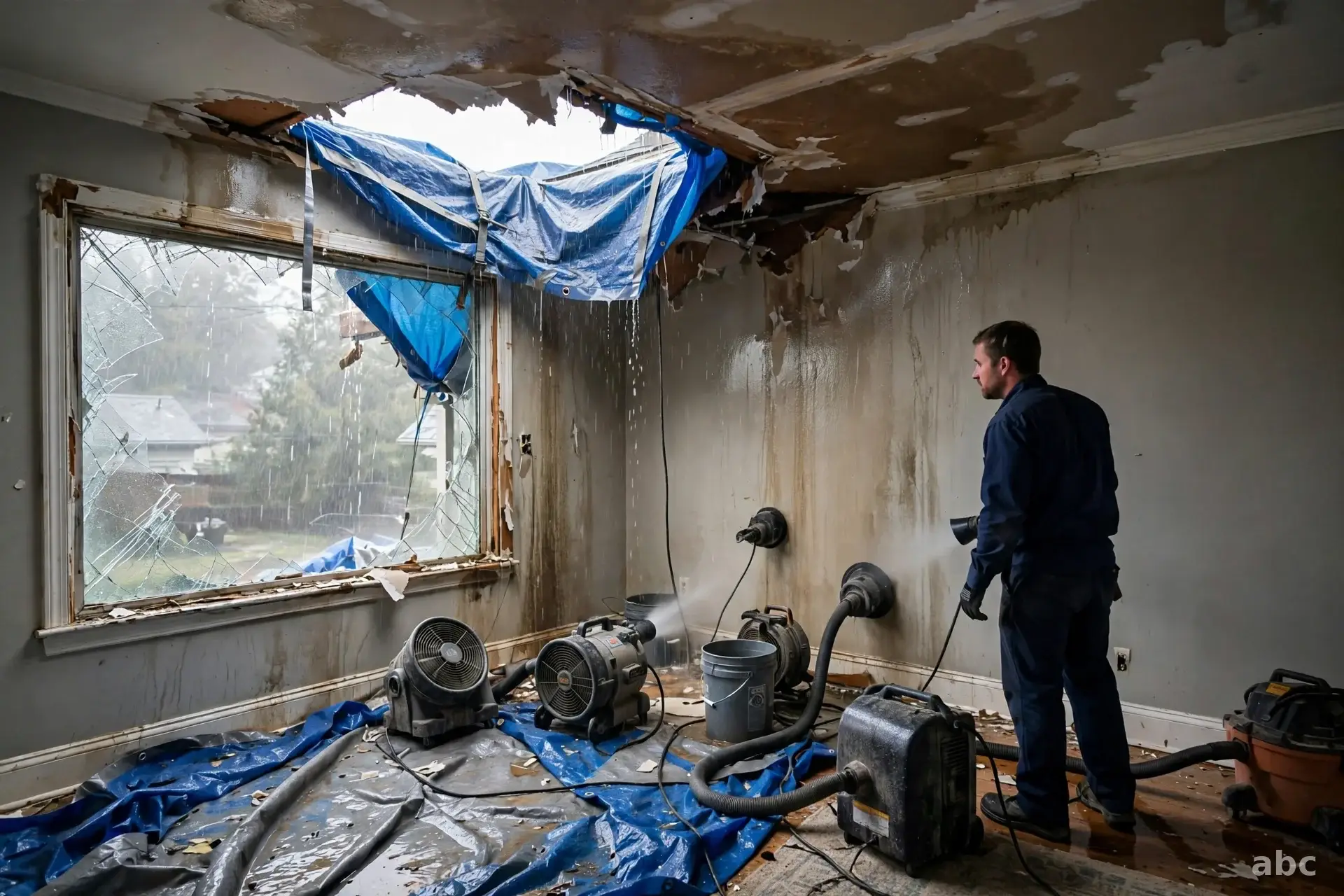
What Is Storm Damage Restoration?
You need storm damage restoration when violent weather breaches your home's defenses. In New York that means hurricane remnants tearing at roofs along the coast and Long Island, nor'easters driving rain sideways into siding and window frames for hours, summer thunderstorms dropping limbs onto roofs, and wind-driven rain finding every weak flashing joint. Even a small roof puncture can soak insulation and ceilings long before anyone notices a stain. After any major storm, check the attic and top-floor ceilings — damage up high spreads downward fast.
Storm restoration starts where the weather hit, not where the water landed. Unlike Flood Damage Restoration, which handles rising exterior water, storm restoration deals with water driven in from above — through roofs, windows, and siding — plus impact damage from debris. And unlike a roofing contractor, who fixes the roof itself, restoration handles everything the water damaged inside. Urgency is high: an open or leaking roof invites the next rainfall straight in, so the site must be secured quickly.
| First priority | Secure the site against more rain |
|---|---|
| Common entry points | Roofs, windows, siding, flashing |
| Typical drying time | 3–5 days for most homes |
| Availability | 24/7, including holidays |
What's Included In Storm Damage Restoration?
Usually included — the exact work depends on the provider and the damage.
Site Securing
The provider arranges temporary protection — tarping damaged roof areas and covering broken windows — so the next rainfall doesn't undo the recovery. Securing first is what makes everything after it possible.
Wind-Driven Rain Extraction
Rain forced in through windows, siding, and vents pools inside wall cavities and across floors. Professional extractors pull this trapped water out before it migrates deeper into framing and insulation.
Attic and Upper-Floor Water Removal
Storm water usually starts at the top of the house and works down. Pumps and extractors clear attics, upper bedrooms, and stairwells completely, stopping the water before it travels further down through ceilings and walls.
Structural Drying
Air movers and dehumidifiers dry soaked insulation cavities, wall framing, and ceilings over several days. The provider tracks moisture readings daily until the structure verifies dry. Learn more about Structural Drying.
Structural Drying
Hidden Moisture Checks
Thermal imaging finds water trapped behind siding, inside soffits, and within wall cavities after wind-driven rain events. Catching hidden moisture now prevents wood rot and mold problems months down the road.
Interior Debris Cleanup
Fallen plaster, soaked insulation, and storm debris tracked inside are cleared out of living spaces. Removing ruined material is often the necessary first step before drying equipment can do its job properly.
Signs You Need Storm Damage Restoration
Active Drip During Rain
Water actively dripping indoors while it rains means the building envelope is breached — the longer it runs, the wider the damage spreads.
New Stains After a Storm
Fresh yellow or brown marks on ceilings and upper walls after windy weather almost always trace back to roof or flashing failure.
Missing Shingles or Siding
Bare patches on the roof or siding after high winds invite the next rain straight in — cover them before the next storm.
Water Around Window Frames
Puddles on sills or damp drywall beneath windows after storms point to failed seals or wind-driven rain beating past the flashing.
Basement Water After Heavy Rain
Storm runoff pooling at the foundation can push through window wells and wall joints, flooding the lowest level first.
Peeling Paint or Bubbling Wallpaper
Paint that blisters or paper that bubbles after storms signals moisture moving through the wall from the outside in.
Seeing one of these? Call (800) 110-0003 now — a local pro typically arrives in 30–45 minutes.
How Storm Damage Restoration Works
- 1Secure the Site
The provider arranges tarping over damaged roofing and covers broken windows so the next rainfall cannot add to the damage. No drying plan works under an open sky.
- 2Extract Water
Professional extractors remove water from attics, upper floors, and anywhere wind-driven rain pooled inside. Clearing it quickly stops the downward spread through ceilings and walls below.
- 3Dry Structure
Air movers and dehumidifiers dry out framing, insulation cavities, and ceilings over several days. The provider tracks moisture readings daily until every affected material verifies as fully dry.
- 4Coordinate Repairs
Once the structure verifies dry, damaged drywall, insulation, and finishes are repaired or replaced. The provider's moisture documentation supports your insurance claim for the storm damage.
How long does it take? Storm jobs vary widely — a single roof leak may dry in days, while widespread wind and rain damage takes a week or more. Securing the site comes first; drying timelines follow once the building is protected.
Hurricane And Strong Wind Risk Across New York
Why storm damage restoration calls spike in certain counties — backed by FEMA and NOAA data.
County risk rating — FEMA National Risk Index, Dec 2025
County risk rating — FEMA National Risk Index, Dec 2025
County risk rating — FEMA National Risk Index, Dec 2025
County risk rating — FEMA National Risk Index, Dec 2025
County risk rating — FEMA National Risk Index, Dec 2025
Hurricane season runs June through November, and nor'easters can batter the region from fall into spring (Source: NOAA).
Suffolk, Nassau, and Westchester counties have each received 17 or more FEMA disaster declarations tied to hurricanes, severe storms, and flooding (Source: FEMA).
Summer severe thunderstorms drive the majority of the region's wind and hail events each year (Source: NOAA Storm Events Database).
Why Call abc For Storm Damage Restoration?
Storm damage is really two emergencies at once — a breached building letting weather in, and water spreading inside. Calling abc connects you with an independent local professional who handles both: securing the site first, then the full water recovery, 24/7.
Nights, weekends, holidays — a real person picks up.
Toll-free number. No charge to reach a local pro.
47 cities covered from one memorable number.
Connected with local pros who do the work.
Apartments, houses, offices, retail, restaurants.
Typical arrival window once you're connected.
What New Yorkers Say
Storm Damage Restoration Tips: What To Do (And Avoid)
Stay Clear of Downed Lines
Storms knock power lines onto roofs, yards, and flooded areas. Treat every downed line as live, keep your distance, and report it to the utility before doing anything else.
Cover Openings Quickly
If safe, drape a tarp or heavy plastic over broken windows and roof holes before the next rain band arrives. Even a rough temporary cover prevents far worse damage.
Don't Climb on a Wet Roof
Wet, storm-damaged roofs are extremely slippery and structurally uncertain. Leave all roof work to the provider — a fall costs far more than a delayed tarp.
Photograph Damage for Insurance
Capture roof damage, broken windows, water stains, and fallen debris before any cleanup begins. Wide shots plus close-ups together give insurance adjusters the full picture of what happened.
Check the Attic After Every Storm
Attics reveal roof leaks before any other room does — look for damp insulation, active drips, or daylight showing through boards. Catching a leak up here saves every ceiling below it.
Move Belongings From Under Leaks
Shift furniture, electronics, and storage boxes away from active drips, and place buckets or towels to catch falling water. Whatever never gets wet is whatever never needs restoring.
Don't Do This
- Don't climb onto a wet or storm-damaged roof.
- Don't touch downed power lines — treat all as live.
- Don't wait through another storm before calling.
Storm Water Coming In Right Now?
Every additional rainfall makes storm damage worse — an open roof or broken window invites the next band of rain straight inside. If water is actively entering, call now so a local pro can secure the site and start extraction fast.
Available In 47 New York Cities
Popular Right Now
Show All 47 Cities (A–Z)
Storm Damage Restoration Questions, Answered
Contain it from inside: place buckets under drips, move belongings away, and poke no holes — let the provider handle the roof. If safe, a tarp from the ground helps, but never climb up in wind or rain. Call (800) 110-0003 so a local pro can secure and dry things properly.
Most policies cover sudden storm damage like wind-torn roofing and the water that enters through it, minus your deductible. Flood from rising water needs separate flood insurance. Document everything with photos before cleanup and ask the provider for the reports adjusters want.
A local pro typically arrives in 30–45 minutes after you're connected, 24/7 — even during widespread storm events, though extreme weather can affect timing. The provider confirms an ETA when you call, and homes with open roofs or active leaks get priority.
Yes — professional drying equipment works in every season, and emergency securing like tarping and window covering happens year-round. Frozen conditions can slow permanent exterior repairs, but interior water removal and structural drying should never wait for spring to begin.
Rain pushed sideways by strong winds, forcing water through window frames, siding joints, vents, and tiny flashing gaps that vertical rain would never enter. It explains why upper floors and walls get wet even when the roof looks intact after a storm.
Only if you can do it safely from a ladder on stable, dry ground — and never in wind, rain, or darkness. Most homeowners are safer waiting for the provider, who tarps damaged roofs routinely. A fall from a roof can cause life-changing injuries.
Water travels — the stain is rarely directly under the entry point. Check the attic above the stain for damp insulation or daylight through boards, and note which slope faces the storm. The provider uses thermal imaging to trace the true path.
It can depend on your insurer, your claim history, and state rules — there is no universal answer. What strengthens every claim is fast mitigation plus thorough documentation, since insurers look favorably on homeowners who move quickly to limit damage.
Secure Your Home After the Storm
Storm damage gets worse with every new rainfall. Call (800) 110-0003 now and get connected with an independent local storm recovery pro — 24/7, anywhere in New York.
(800) 110-0003Sources & methods: how we research and verify everything on this site →