
Water Damage Inspection In New York
One free call connects you with an independent local pro for water damage inspection — thermal imaging and moisture readings, 24/7, anywhere in New York.
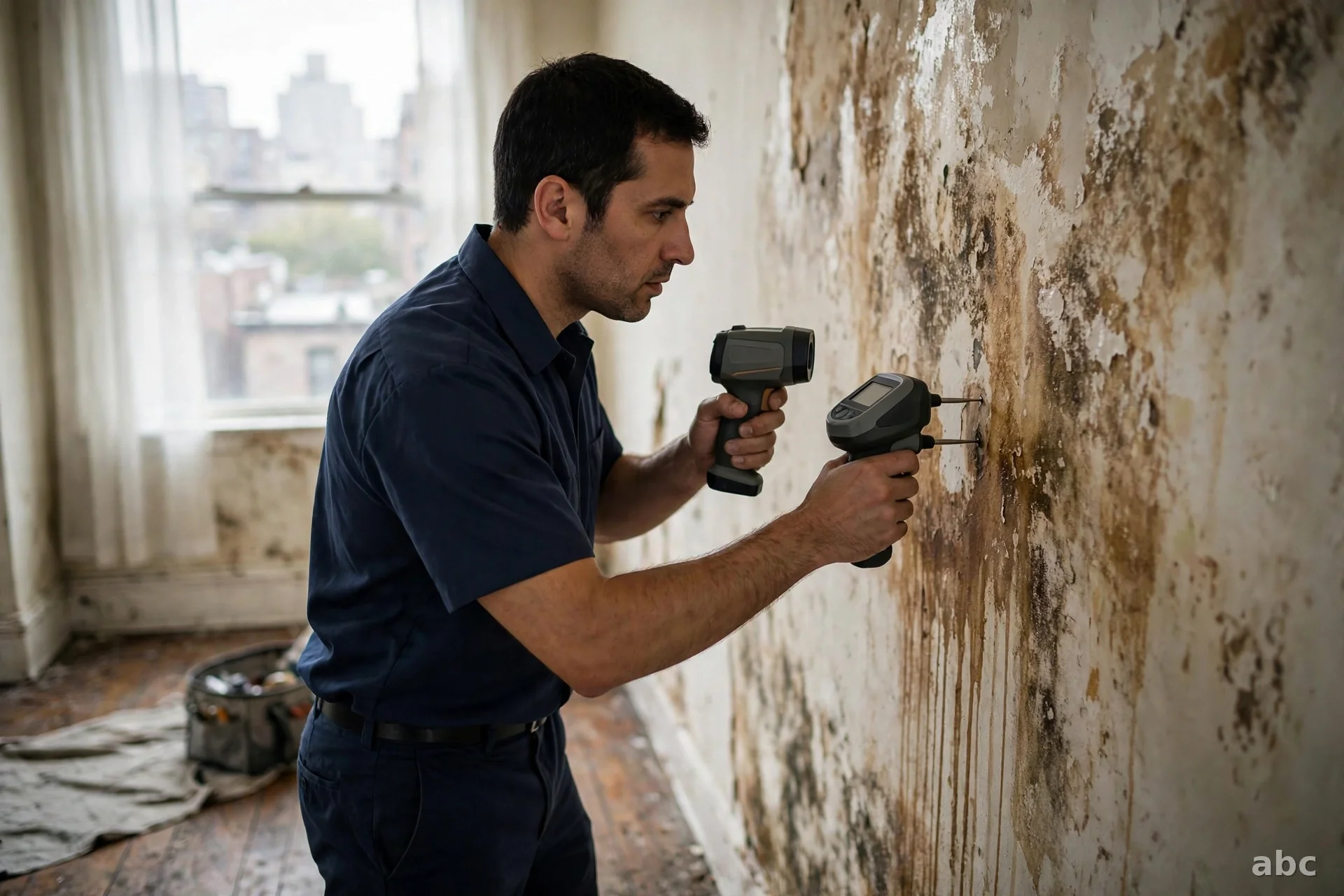
What Is Water Damage Inspection?
Book an inspection when you suspect water damage but can't see its full extent — a stain that keeps returning, a musty room with no visible leak, warped flooring near a bathroom, or a ceiling mark left after an upstairs incident was supposedly fixed. It's also the right move before filing an insurance claim, hiring a contractor for repairs, or buying a home with a leak in its past. In all these cases, you're paying for certainty: a map of what's actually wet, measured with instruments rather than guessed from the surface.
This is fundamentally different from Water Damage Restoration, which performs the physical work of extracting water and drying the structure — inspection only diagnoses. It also differs from Structural Drying, which runs equipment for days; the inspection is a one-visit assessment that tells you whether drying is even needed. Acting on facts matters because the EPA notes that mold can begin growing on damp materials within 24 to 48 hours — knowing exactly what's wet lets the right work start without delay or wasted demolition.
| What It Is | Diagnostic only — no drying or repairs performed |
|---|---|
| Tools | Thermal imaging plus pin/pinless moisture meters |
| Duration | Usually 1–2 hours for a typical home |
| Output | Written report with readings and photos |
| Ideal Timing | Before repairs, before closing a claim, or when damage extent is unknown |
What's Included In Water Damage Inspection?
Usually included — the exact work depends on the provider and the damage.
Thermal Imaging Scan
A methodical walkthrough with an infrared camera that highlights cool, damp areas behind paint, tile, and drywall — the hidden places eyes alone can never check, no matter how carefully you look.
Moisture Meter Readings
Pin and pinless meters take actual moisture readings in walls, floors, and ceilings, turning vague suspicions into hard numbers. You leave the visit knowing exactly what's wet — and what isn't.
Room-by-Room Walkthrough
Every affected room is checked methodically — closets, basements, laundry areas, and the tight spaces around plumbing chases where water likes to travel unseen. Nothing in the affected zone gets skipped.
Source Identification
The provider traces stains and meter readings back toward the likely origin — a failed supply line, a roof leak, or a foundation seepage point — so you know exactly where the water started.
Written Report
A written report with findings, moisture readings, and dated photos — made for sharing with your insurer, a contractor, or your own records. Clear documentation you can rely on months later.
Signs You Need Water Damage Inspection
Musty Odor, No Visible Source
An earthy smell with no visible source often means moisture is trapped inside a wall or under a floor.
Stains Bleeding Through Paint
Stains that bleed through fresh paint — the water is still active behind the surface.
Cupping Wood Floors
Wood floors cupping or tiles loosening in one area while the rest of the room looks perfectly fine.
Ceiling Stain After a Past Leak
A ceiling stain after an upstairs leak was fixed — was it ever actually dried?
Need Documented Evidence
You need documented evidence of the damage extent for an insurance claim or a contractor quote.
Buying a Home With Leak History
Buying a home with a history of leaks and wanting the facts before you commit.
Seeing one of these? Call (800) 110-0003 now — a local pro typically arrives in 30–45 minutes.
How Water Damage Inspection Works
- 1Interview
The provider asks what happened, when it started, and what you've noticed since — your observations guide exactly where the thermal scan focuses first today.
- 2Thermal Scan
An infrared camera slowly sweeps walls, ceilings, and floors room by room, flagging the cool, uneven patterns that suggest trapped moisture hiding behind finished surfaces.
- 3Moisture Readings
Pin and pinless meters confirm each suspect spot with hard numbers, mapping exactly how far the dampness reaches in every direction — including into adjacent rooms.
- 4Written Report
You receive a clear written report — findings, readings, photos, and recommended next steps for what comes after. Remember: this visit diagnoses only; no repairs are performed.
How long does it take? The inspection itself usually takes one to two hours, and the written report follows the same day or shortly after. If the findings call for drying or repairs, those are separate services you can schedule with full knowledge of the scope.
Why Call abc For Water Damage Inspection?
Guessing about hidden moisture is how small leaks become big rebuilds. A referral call connects you with a local pro who maps exactly what's wet with thermal imaging and meters — then hands you a written report. Whether you're filing a claim, hiring a contractor, or buying a home, you move forward with measured facts instead of expensive assumptions.
Nights, weekends, holidays — a real person picks up.
Toll-free number. No charge to reach a local pro.
47 cities covered from one memorable number.
Connected with local pros who do the work.
Apartments, houses, offices, retail, restaurants.
Typical arrival window once you're connected.
What New Yorkers Say
Water Damage Inspection Tips: What To Do (And Avoid)
Write Down the Timeline
Write down when you first noticed the problem and anything that changed since — new stains, new smells, recent weather. A clear timeline sharpens the entire inspection.
Photograph Everything First
Photograph every stain, drip, and warped board before the visit, ideally from the same angles days apart. Photos taken over time reveal whether the damage is spreading.
Note Weather and Work History
Note recent weather events, plumbing work, or appliance installations and their dates. Storms and new installations are the two most common backstories behind hidden moisture.
Clear Access to Suspect Walls
Move furniture a foot or two away from suspect walls if you safely can, so the provider can scan the full surface without shifting heavy pieces around.
Locate Your Main Shutoff
Know exactly where your main water shutoff is before anyone arrives. If the inspection uncovers an active leak, you'll want to close it yourself immediately.
Get Findings in Writing
Ask for the report in writing, not just verbal findings at the door. A documented record with readings and photos protects you with insurers and contractors alike.
Don't Do This
- Don't open up walls or pull up flooring yourself before the inspection — disturbing materials can spread moisture and complicate the findings.
- Don't assume a dry surface means a dry wall cavity; hidden moisture is exactly what this visit is designed to find.
Not Sure How Bad the Water Damage Is?
When you can see a stain but can't tell how far the water traveled, guessing leads to either tearing out too much or missing the real problem. An inspection maps the moisture first, so whatever comes next — drying, a claim, or a contractor's repair — starts from facts instead of assumptions.
Available In 47 New York Cities
Popular Right Now
Show All 47 Cities (A–Z)
Water Damage Inspection Questions, Answered
The visit usually takes one to two hours for a typical home, depending on how many rooms are affected. The provider interviews you, scans with thermal imaging, takes moisture readings, and explains the findings before leaving. The written report follows the same day or shortly after.
Yes — that's its main strength. Thermal cameras reveal temperature differences that suggest trapped moisture, and pin or pinless meters confirm it with actual readings. Wet insulation behind drywall and damp subfloor under intact tile are classic finds. If it's wet, the instruments find it.
No. This is a diagnostic service only: it identifies where water is, how far it spread, and what materials are affected. Drying, extraction, and repairs are separate services. The report simply gives you — and your contractor or insurer — a factual starting point.
Bring it up during the interview portion of the visit. The provider will focus the scan on the right areas and note whether the damage looks fresh or long-standing, which is exactly the detail adjusters ask for. Mention the claim when you call.
Often. Musty odors with no visible source, stains that keep returning after painting, and floors that feel uneven can all signal hidden moisture. If a leak was fixed but the area was never properly dried, an inspection confirms whether the job is truly finished — or just hidden.
It varies with the size of the property and how many areas need scanning. The provider explains the scope when you call, before booking the visit — the call itself is free, so you'll know what to expect. No surprises, no obligation.
The provider looks, photographs, and measures — no demolition is involved in a standard inspection. If readings suggest a serious hidden problem, the report will say so and recommend next steps rather than opening anything up. The visit is fully non-invasive.
Find the Hidden Water Before It Finds Your Wallet
One free call connects you with an independent local pro for water damage inspection — thermal imaging, moisture readings, and a written report, 24/7 across New York.
(800) 110-0003Sources & methods: how we research and verify everything on this site →