
Flood Damage Restoration In New York
One free call connects you with an independent local pro for floodwater removal, sanitizing, and deep drying — 24/7, anywhere in New York.
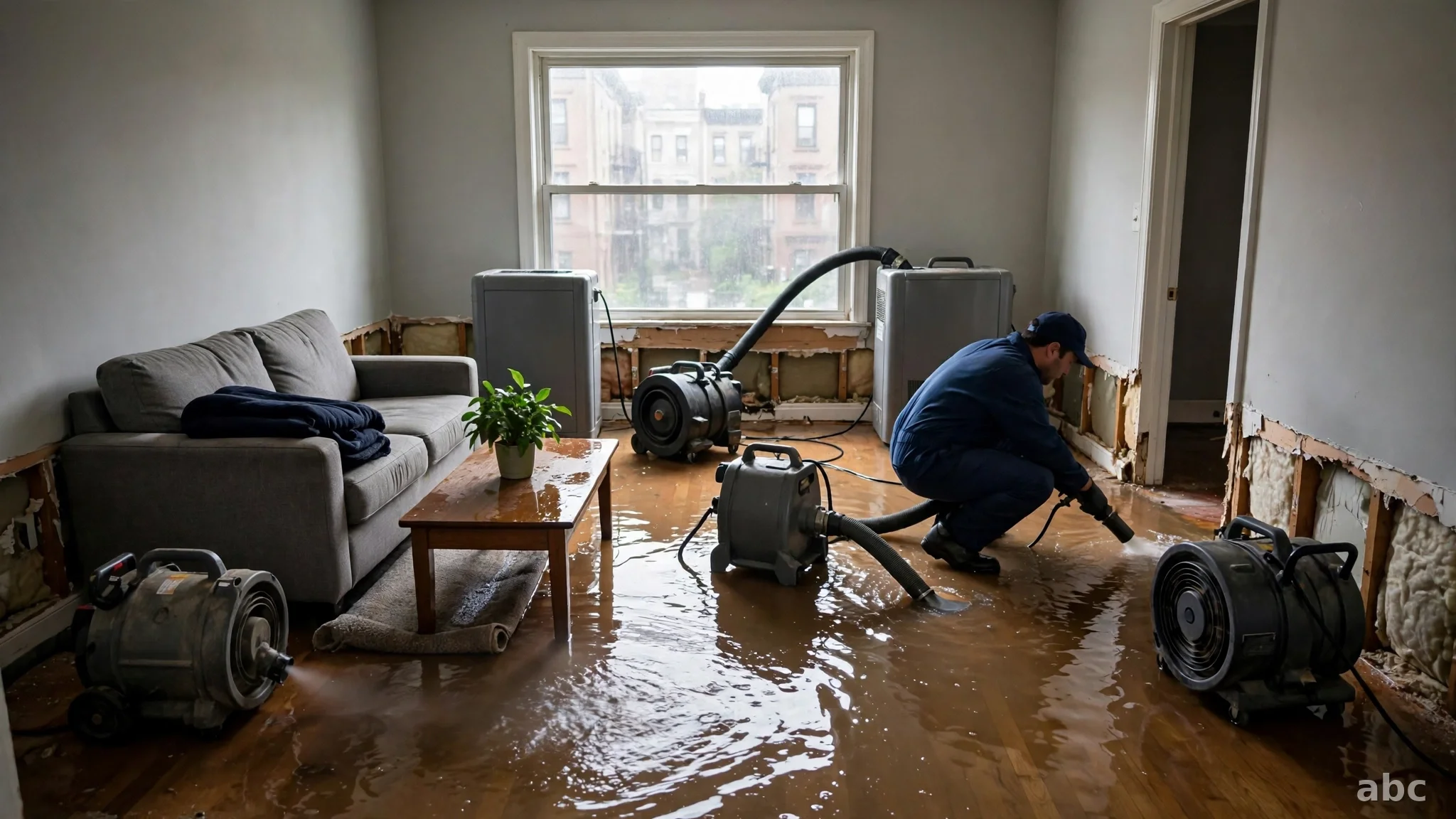
What Is Flood Damage Restoration?
You need flood damage restoration after any event that pushes exterior water inside. Across New York that includes flash floods from summer thunderstorms overwhelming storm drains, basement flooding when the ground is fully saturated, storm surge reaching Long Island and city waterfront neighborhoods, and heavy rain finding its way through window wells and foundation cracks. Floodwater is unpredictable — it can rise inches in minutes and carry mud, fuel, and sewage with it. Because it comes from outside, assume it is contaminated until the provider says otherwise.
Flood restoration goes further than pumping alone. Unlike Water Extraction, which removes the water and stops there, flood restoration adds sanitizing and contamination handling, because floodwater is rarely clean. And unlike Sewage Cleanup, which deals with plumbing-source waste, flood restoration handles exterior water carrying a mix of mud, chemicals, and debris. Speed is critical: the EPA warns that mold can start growing on damp materials within 24 to 48 hours, and contaminated water should never sit untreated in a living space.
| First priority | Safety check, then water removal |
|---|---|
| Floodwater type | Often contaminated — treat as Category 3 |
| Typical drying time | 3–7 days for most homes |
| Availability | 24/7, including holidays |
What's Included In Flood Damage Restoration?
Usually included — the exact work depends on the provider and the damage.
Floodwater Removal
High-capacity pumps and extractors clear floodwater from basements, ground floors, and crawl spaces. Fast removal limits how long contaminants stay in contact with the structure, contents, and belongings inside your home.
Sanitizing and Disinfection
Every surface the floodwater touched is cleaned and disinfected, since exterior floodwater can carry sewage, fuel, and bacteria. The provider uses appropriate antimicrobial treatments for the contamination level found on site.
Basement and Crawl Space Pumping
Below-grade spaces collect the worst of every flood event. Submersible pumps empty basements and crawl spaces completely, including the low corners, pits, and sump basins where water likes to hide.
Deep Structural Drying
Air movers and dehumidifiers dry framing, subfloors, and wall cavities after the water is gone. Daily moisture readings track progress until the structure verifies dry. Learn more about Structural Drying.
Structural Drying
Contamination Assessment
The provider determines what the floodwater carried — mud, chemicals, sewage — because the contamination level decides which materials can be cleaned and which must be removed. This assessment shapes the whole job.
Content Cleaning
Furniture, rugs, and belongings touched by floodwater are cleaned where salvageable. The provider separates what can be restored from what contamination has ruined, so you know exactly where things stand.
Signs You Need Flood Damage Restoration
Sewage Smell After Rain
A foul odor rising from drains or the basement after storms suggests floodwater mixed with sewage — treat it as contaminated.
Water Lines on Walls
Horizontal mud lines on basement or ground-floor walls show how high floodwater reached — even if it has receded by the time you look.
Yard Flooding Near the Foundation
Standing water pooling against the house after rain often finds its way inside through cracks, window wells, or the sill plate.
Sagging Drywall After Storms
Ceilings or walls that bow downward absorbed water from above. Stay clear of sagging sections — saturated drywall can collapse without warning.
Safety: Stay clear of sagging sections — saturated drywall can collapse.
Damp Cold Patches
Wall sections that feel cold and clammy days after a storm usually hold trapped floodwater behind the surface.
Foundation Seepage
Water weeping through foundation walls or the floor joint after heavy rain will keep returning until the area is dried and the entry point addressed.
Seeing one of these? Call (800) 110-0003 now — a local pro typically arrives in 30–45 minutes.
How Flood Damage Restoration Works
- 1Safety Check
The provider first checks for electrical hazards, structural damage, and contamination before anyone enters the water. Floodwater and electricity are a dangerous combination, so this step is never skipped.
- 2Extract
Pumps and extractors remove the floodwater from every affected space, starting with the deepest areas. Complete removal comes before any cleaning or drying begins on site.
- 3Sanitize
All surfaces the floodwater contacted are cleaned and disinfected with treatments matched to the contamination found. Porous materials that cannot be safely cleaned are removed.
- 4Dry
Air movers and dehumidifiers dry the structure over several days while daily moisture readings track progress. Equipment stays in place until every material verifies as fully dry.
How long does it take? Flood jobs usually need 3–7 days of drying after the water is out, longer when contamination requires extra cleaning. Nothing is rushed — materials must test dry before repairs start.
Flood Risk Across New York
Why flood damage restoration calls spike in certain counties — backed by FEMA and NOAA data.
County risk rating — FEMA National Risk Index, Dec 2025
County risk rating — FEMA National Risk Index, Dec 2025
County risk rating — FEMA National Risk Index, Dec 2025
County risk rating — FEMA National Risk Index, Dec 2025
County risk rating — FEMA National Risk Index, Dec 2025
About 82% of flash-flood and severe-storm events in the region strike between June and September (Source: NOAA Storm Events Database, 2021–2024).
Suffolk County has received 19 FEMA flood-related disaster declarations — the most in the service area (Source: FEMA).
Service-area counties average 45.5 to 48.3 inches of rain per year, and saturated ground turns heavy rain into flash flooding (Source: NOAA).
Why Call abc For Flood Damage Restoration?
Floodwater brings contamination, not just moisture — which is why the response needs sanitizing expertise, not just pumps. Calling abc connects you with an independent local professional experienced in flood recovery, from the first safety check to the final dry reading, 24/7.
Nights, weekends, holidays — a real person picks up.
Toll-free number. No charge to reach a local pro.
47 cities covered from one memorable number.
Connected with local pros who do the work.
Apartments, houses, offices, retail, restaurants.
Typical arrival window once you're connected.
What New Yorkers Say
Flood Damage Restoration Tips: What To Do (And Avoid)
Never Enter Floodwater Near Power
If floodwater reaches outlets, appliances, or the breaker box, stay out and shut power off from a dry location. Water and electricity together can be lethal.
Call Before Water Sits Overnight
Contaminated water does more damage the longer it sits. Calling the same day you discover flooding gives the provider the greatest chance to save flooring and drywall.
Lift Belongings Off the Floor
Move furniture, rugs, and boxes to higher ground or upper floors as soon as flooding starts. What stays in floodwater longest is usually what cannot be saved.
Note Dates and Times
Write down when the flooding started and when you discovered it. Insurers and adjusters ask for timelines, and memory fades faster than you expect afterward.
Check Hidden Spaces Afterward
Once the visible water is gone, check closets, under stairs, and behind large appliances. Floodwater hides in low, enclosed spots that stay damp the longest.
Shut Off Gas If You Smell It
Floodwater can shift gas lines and damage appliances without any visible sign. If you smell gas, leave the building immediately, touch nothing electrical, and call 911 from outside.
Don't Do This
- Don't drive through flooded streets to check on a property.
- Don't use electronics that floodwater touched.
- Don't assume clear-looking floodwater is clean.
Floodwater Rising Right Now?
Rising water doesn't wait, and neither should you. Floodwater spreads contamination as it climbs — into drywall, flooring, and belongings. If water is entering your home, call now so a local pro can start removal before it gets deeper tonight.
Available In 47 New York Cities
Popular Right Now
Show All 47 Cities (A–Z)
Flood Damage Restoration Questions, Answered
Standard homeowners policies exclude flooding — damage from rising exterior water needs separate flood insurance, usually through the National Flood Insurance Program. Sudden plumbing failures are different and often covered. Review your policy before storm season arrives, not after a flood.
Always treat it as contaminated. Floodwater can carry sewage, fuel, chemicals, and bacteria picked up from streets and soil. Wear rubber boots and gloves if you must go near it, keep children and pets completely away, and let the provider handle disinfection.
Expect 3 to 7 days of active drying after the floodwater is fully removed, with daily moisture readings tracking progress. Contaminated floods needing extra sanitizing take longer. Equipment stays until every material tests dry — rushing the process risks hidden mold.
Stay out of the water, especially anywhere near electricity or the breaker panel. Move valuables to higher ground, photograph everything for insurance, and note when the flooding started. Then call (800) 110-0003 so a local pro can begin removal and sanitizing quickly.
Sometimes, if the water was clean and extraction starts within hours. Floodwater carrying contaminants usually means carpet and padding must be removed, since padding traps whatever the water carried. The provider assesses the contamination level first and gives you an honest answer either way.
A local pro typically arrives in 30–45 minutes after you're connected, day or night, weekends and holidays included. Active flooding calls get priority routing, though timing still depends on location, traffic, and demand — the provider confirms an ETA when you call.
It can, if the water's entry point is never addressed. Restoration dries out and repairs the current damage; preventing repeats may mean regrading soil, sealing cracks, adding a sump pump, or installing backflow prevention. The provider can point out likely entry points during the visit.
The industry term for grossly contaminated water — floodwater, sewage backups, or any water carrying significant bacteria and pathogens. It demands protective equipment, thorough disinfection, and usually the removal of porous materials like carpet padding, drywall, and insulation that it touched.
Recover From Flooding the Right Way
Floodwater brings contamination that plain drying can't fix. Call (800) 110-0003 now and get connected with an independent local flood restoration pro — 24/7, anywhere in New York.
(800) 110-0003Sources & methods: how we research and verify everything on this site →