
Structural Drying In New York
One free call connects you with an independent local pro for scientific structural drying — mapped, monitored, verified, 24/7 across New York.
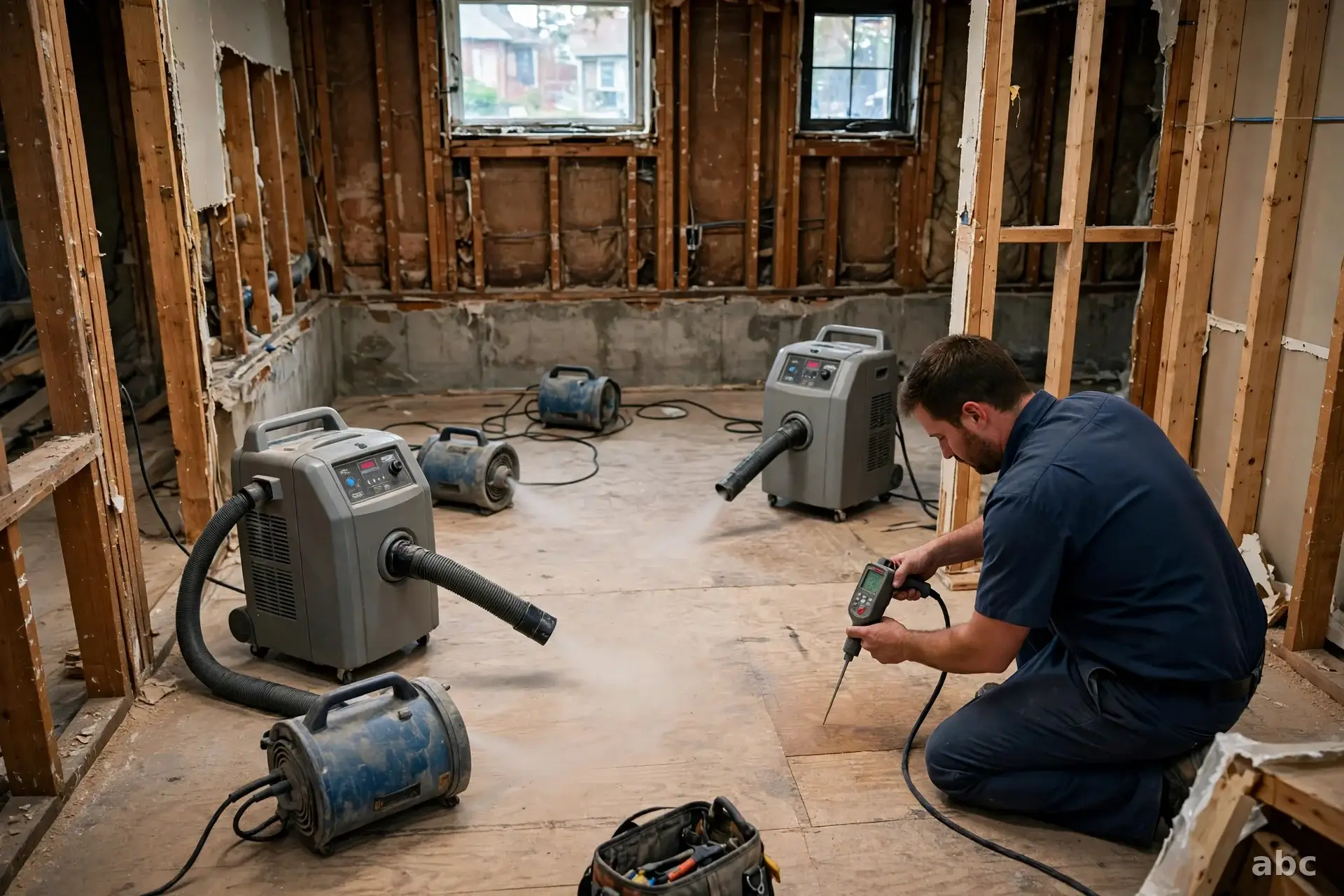
What Is Structural Drying?
You need structural drying whenever water has soaked into building materials — not just puddled on top of them. A dishwasher leak swells the subfloor beneath the tile. A roof leak wets insulation and ceiling joists you cannot see. A musty smell with no visible water usually means moisture trapped behind drywall or under flooring. If surfaces still feel damp days after a spill, or a moisture meter shows elevated readings, the structure itself needs drying — surface wiping will not reach it.
Structural drying picks up where Water Extraction leaves off — extraction removes the standing water, drying removes what soaked in. It also differs from a Water Damage Inspection, which finds and maps hidden moisture but does not remove it. Drying is the treatment that follows the diagnosis. Speed still matters: EPA guidance states that mold can begin within 24 to 48 hours on damp materials, and prolonged moisture warps wood, crumbles drywall, and weakens framing over time — damage that only gets more expensive.
| Goal | Dry materials in place, avoid tear-out |
|---|---|
| Equipment | Air movers + low-grain dehumidifiers |
| Typical duration | 3–5 days with daily monitoring |
| Verification | Moisture readings confirm dry standard |
What's Included In Structural Drying?
Usually included — the exact work depends on the provider and the damage.
Thermal Imaging & Moisture Mapping
Infrared cameras and meters are usually the starting point — the exact work depends on the provider and the damage. They reveal exactly which walls, floors, and cavities hold moisture.
Targeted Air Mover Placement
High-velocity air movers are angled across wet surfaces to speed evaporation exactly where readings show it is needed. Each unit's angle and distance are set deliberately — random placement wastes days of drying time.
Commercial Dehumidification
Low-grain dehumidifiers pull the evaporated moisture from the air so it does not simply resettle elsewhere. These commercial units extract far more water per day than anything sold for home use.
Daily Moisture Monitoring
The provider returns to take readings and reposition equipment until every material meets a dry standard. This daily feedback loop is what separates scientific drying from guesswork and crossed fingers.
Dry Verification Report
Final readings are documented so you have proof the structure dried properly — useful for insurers and buyers alike. The report lists every tested location with its final moisture content for your records.
Signs You Need Structural Drying
Warped or Cupped Flooring
Wood floors that curl at the edges absorbed moisture from below and need professional drying.
Peeling Paint or Bubbling Wallpaper
Finishes that lift, peel, or blister signal moisture pushing outward from inside the damp wall.
Musty Smell, No Visible Water
A damp odor with dry surfaces means water is trapped where you cannot see it.
Swollen Baseboards or Trim
Trim that swells or pulls away from the wall wicked up water from the floor.
Cold, Damp Spots on Walls
Cool patches on drywall often mark hidden moisture — a thermal camera confirms it fast.
An Old Leak, Never Fully Dried
A past spill that 'dried on its own' may still hold moisture deep in the structure.
Seeing one of these? Call (800) 110-0003 now — a local pro typically arrives in 30–45 minutes.
How Structural Drying Works
- 1Map Moisture
Thermal imaging and penetrating meters locate every wet area, including inside wall cavities, before a single machine is placed anywhere. No guesswork, just accurate readings.
- 2Place Equipment
Air movers and dehumidifiers are positioned according to the moisture map, targeting the wettest materials first for the fastest results and balanced airflow throughout the space.
- 3Monitor Daily
The provider returns each day to take fresh readings, reposition equipment as zones dry, and confirm steady progress toward the agreed dry standard every visit.
- 4Verify Dry
Final moisture readings across every affected material confirm the structure has reached a verified dry standard. Only then is equipment removed and the job closed out.
How long does it take? Most structural drying jobs take three to five days of monitored equipment time, though dense materials like hardwood and plaster take longer. The provider tracks daily readings and removes equipment only when everything tests dry — the timeline follows the moisture, not the calendar.
Water Damage Risk Across New York
Why structural drying calls spike in certain counties — backed by FEMA and NOAA data.
County risk rating — FEMA National Risk Index, Dec 2025
County risk rating — FEMA National Risk Index, Dec 2025
County risk rating — FEMA National Risk Index, Dec 2025
County risk rating — FEMA National Risk Index, Dec 2025
County risk rating — FEMA National Risk Index, Dec 2025
Suffolk County has weathered 19 FEMA flood-related disaster declarations — each one leaving buildings across the region in need of structural drying. (Source: FEMA OpenFEMA Disaster Declarations)
About 82% of flash-flood and severe-storm events in the region strike June through September, making summer the busiest season for soaked walls and floors. (Source: NOAA Storm Events Database, 2021–2024)
The EPA notes that mold can begin growing on damp building materials within 24 to 48 hours, which is why verified drying matters more than surfaces that merely look dry. (Source: EPA)
Why Call abc For Structural Drying?
Wet drywall and framing do not dry properly on their own — trapped moisture warps, rots, and grows mold long after surfaces look fine. When you call, an independent local professional maps the hidden moisture and sets up a drying plan for your specific materials. A local pro typically arrives in 30–45 minutes.
Nights, weekends, holidays — a real person picks up.
Toll-free number. No charge to reach a local pro.
47 cities covered from one memorable number.
Connected with local pros who do the work.
Apartments, houses, offices, retail, restaurants.
Typical arrival window once you're connected.
What New Yorkers Say
Structural Drying Tips: What To Do (And Avoid)
Leave Equipment Running
Drying machines are designed to run around the clock — switching them off, even overnight, can add days to the job. Leave every unit running.
Keep Doors and Windows Closed
If it is safe, keep the drying zone sealed off — humid outside air pouring in works directly against the dehumidifiers. Close interior doors too.
Don't Move the Air Movers
Every unit is angled for a reason — moving them slows drying in exactly the spots that need airflow most. Ask the provider before touching anything.
Keep the Area Clear
Give the equipment room to breathe — boxes stacked against air movers block the very airflow doing the work. Keep a clear path around each unit.
Watch for Musty Smells
A new musty odor during drying can signal a missed wet spot — mention it promptly when the provider returns for readings. Early catches stay small.
Be Patient With the Process
Drying cannot be hurried without risking mold — trust the daily moisture readings, which show genuine progress. The equipment leaves when the numbers say so.
Don't Do This
- Don't turn off dehumidifiers to 'save electricity' — interrupted drying lets moisture rebound overnight.
- Don't paint over damp drywall — trapped moisture will blister the paint and feed mold behind it.
Wet Walls or Floors Right Now?
If water has soaked into your walls or floors, the clock is already running — mold can begin within 24 to 48 hours on damp materials. Stop the source if safe, and call now. A local pro typically arrives in 30–45 minutes to map the moisture and start drying.
Available In 47 New York Cities
Popular Right Now
Show All 47 Cities (A–Z)
Structural Drying Questions, Answered
Structural drying is the controlled removal of moisture from walls, floors, ceilings, and framing using air movers, dehumidifiers, and moisture meters. The aim is to save building materials by drying them in place rather than tearing them out. Daily readings track progress until everything meets a dry standard.
Most jobs take three to five days of monitored drying, though dense hardwoods, plaster, and thick insulation take longer. The timeline follows moisture readings, not the calendar — equipment stays until every material tests dry. Rushing the process risks mold and warped finishes.
Often, yes — if drying starts quickly. Air movers directed into wall cavities and behind baseboards can dry drywall in place, and the provider verifies progress with meters. Drywall that stayed saturated for days, sagged, or shows mold usually must be removed instead.
Household fans move air but cannot control humidity — evaporated moisture simply resettles on cool surfaces. Professional dehumidifiers actually remove water from the air, and moisture meters confirm when materials are truly dry. Without both, dampness hides and mold follows.
The provider uses pin and pinless moisture meters to compare readings against dry standards for each material — wood, drywall, and concrete each have their own targets. Readings are taken daily in the same spots. Equipment is removed only when every affected material consistently tests dry.
Fast, thorough drying is the most reliable mold prevention there is — the EPA notes mold can begin within 24 to 48 hours on damp surfaces, so beating that window matters. Drying removes the moisture mold needs to grow. If mold is already visible, mention it on the call so the provider plans accordingly.
Air movers and dehumidifiers do hum — comparable to a loud fan running in the next room. Most people get used to it within a day. The provider places equipment to balance effective airflow with livability, and everything is removed as soon as readings confirm the structure is dry.
Dry It Right the First Time
Hidden moisture only gets worse — call (800) 110-0003 for drying that is mapped, monitored, and verified. Calls are answered 24/7, and a local pro typically arrives in 30–45 minutes.
(800) 110-0003Sources & methods: how we research and verify everything on this site →