
Ceiling Water Damage Repair In New York
One free call connects you with an independent local pro for ceiling leak tracing, drying, and repair — 24/7, anywhere in New York.
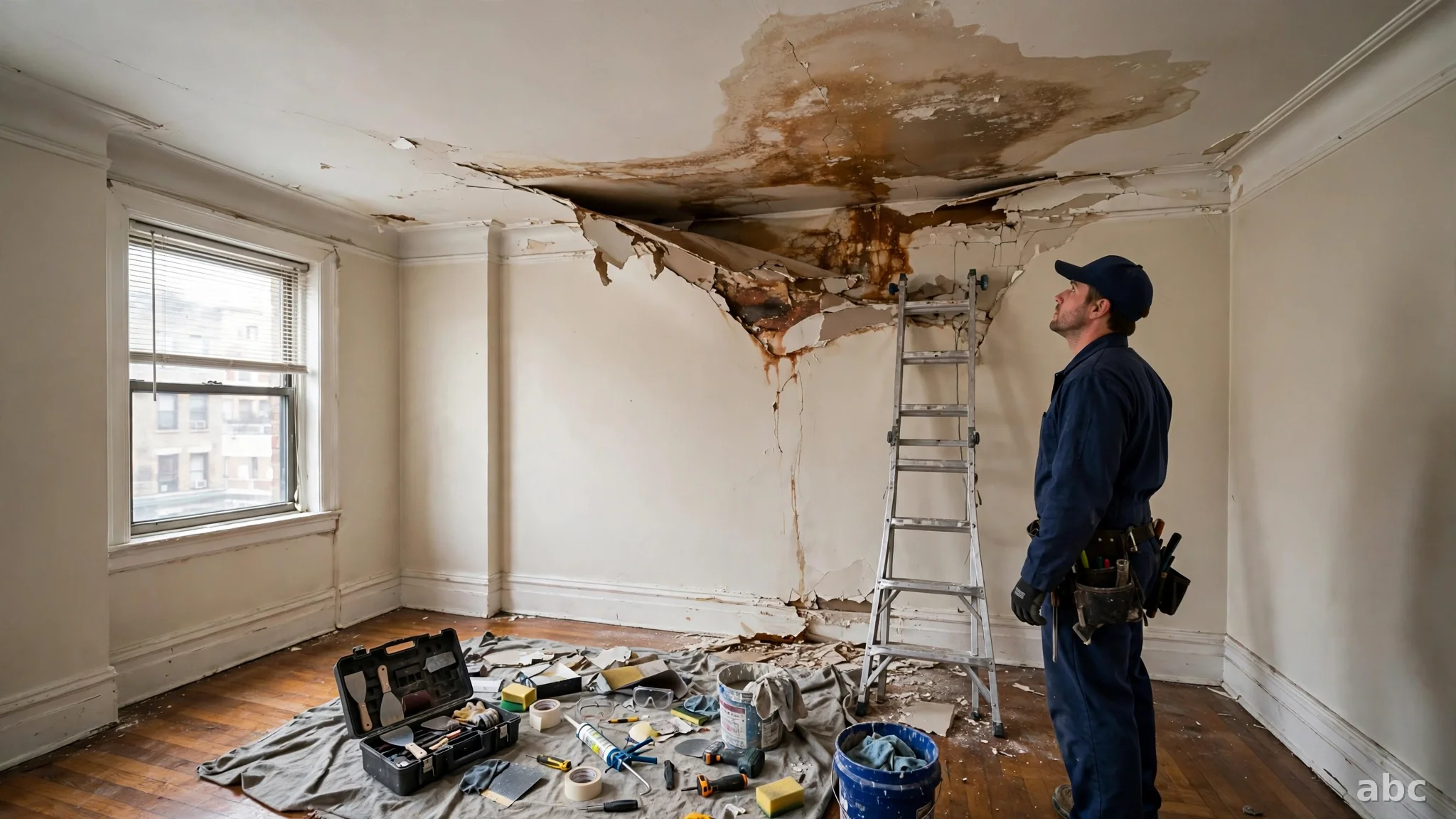
What Is Ceiling Water Damage Repair?
Call for this service when a ceiling shows yellow-brown stains, paint starts bubbling, drips appear during rain or after an upstairs shower, or the drywall begins to sag. Common culprits in New York homes include failed toilet seals, burst supply lines in walls above, ice-dam roof leaks in winter, and aging flashing around vents and skylights. A stain might look small from below while the cavity above holds far more water — which is why a professional assessment beats guessing from the living room couch.
This differs from Burst Pipe Water Damage, which focuses on the failed pipe and the flooding it causes at the source — ceiling repair picks up the damage trail where water traveled and pooled overhead. It also differs from a Water Damage Inspection, which only diagnoses; here the provider performs the removal, drying, and patching. Moving quickly counts because the EPA notes mold can begin growing on damp materials within 24 to 48 hours, and a dark ceiling cavity is an ideal incubator.
| Top Causes | Bathroom leaks, roof failures, burst pipes above |
|---|---|
| Warning Sign | Sagging or bulging — the ceiling may be holding water |
| Drying Time | Typically 2–4 days for a single room |
| Mold Timeline | EPA: mold can start on damp materials within 24–48 hours |
| What's Usual | Trace, stop, remove, dry, patch — exact work depends on the provider and the damage |
What's Included In Ceiling Water Damage Repair?
Usually included — the exact work depends on the provider and the damage.
Leak Source Tracing
The provider follows the damage upward to find where water is actually entering — a failed wax ring, a supply line, a roof penetration — because fixing the ceiling without fixing the source is pointless.
Moisture Mapping
Pin and pinless meters map how far moisture traveled through drywall, insulation, and wooden joists. What looks like a small stain from below often hides a much wider damp zone above.
Damaged Material Removal
Soaked drywall and ruined insulation are cut out in a controlled way, keeping the opening as small as the damage allows. Removing what can't be saved is what lets everything around it dry properly.
Cavity Drying
Air movers and a dehumidifier dry the open cavity and wooden framing over several days. The provider takes fresh moisture readings on return visits until every surface tests fully dry.
Patch & Finish
Fresh drywall goes up over the dried cavity, seams are taped and finished smooth, and the ceiling is left level and ready for your paint — no trace of the repair.
Written Summary
A written summary of the leak source, the work performed, and the final moisture readings, signed off when the cavity tested dry. Handy for your insurance claim and your own home records alike.
Signs You Need Ceiling Water Damage Repair
Sagging or Bulging Ceiling
A ceiling that sags or bulges downward is holding trapped water above the drywall — sometimes gallons of it.
Safety: A bulging ceiling can collapse without warning — keep clear and don't puncture it.
Active Dripping
Active dripping during rainfall or whenever an upstairs fixture runs — the leak is live and the damage is growing.
Yellow-Brown Stain Rings
Yellow-brown rings or spreading discoloration on the paint, often with a darker edge where the waterline sits.
Dripping Sounds From Above
Dripping or trickling sounds from above when the house is quiet — water moving inside a ceiling cavity you can't see.
Bubbling or Peeling Paint
Paint bubbling, peeling, or flaking in a roughly circular patch — moisture pushing the finish away from the drywall.
Soft, Spongy Drywall
Drywall that feels soft or spongy around a stain — the gypsum core is saturated and losing strength.
Seeing one of these? Call (800) 110-0003 now — a local pro typically arrives in 30–45 minutes.
How Ceiling Water Damage Repair Works
- 1Trace the Source
The provider follows stains, drips, and meter readings upward to pinpoint the exact entry point — a bathroom fixture, a roof penetration, or a supply pipe.
- 2Stop the Water
The water supply or leak path is stopped first — valve closed, roof tarped, or fixture isolated. No drying begins until nothing new is coming in.
- 3Remove & Dry
Ruined drywall and soaked insulation come out; then air movers and a dehumidifier dry the open cavity and wooden framing until meter readings confirm everything is dry.
- 4Patch & Finish
New drywall goes up, seams are taped and sanded smooth, and the ceiling is left level and paint-ready — with the leak source properly fixed first.
How long does it take? Most single-room ceiling repairs take two to four days from first visit to paint-ready finish, with drying time in between. Larger leaks that soaked insulation or framing run longer — the provider explains the sequence and timing when they assess the job.
Water Damage Risk Across New York
Why ceiling water damage repair calls spike in certain counties — backed by FEMA and NOAA data.
County risk rating — FEMA National Risk Index, Dec 2025
County risk rating — FEMA National Risk Index, Dec 2025
County risk rating — FEMA National Risk Index, Dec 2025
County risk rating — FEMA National Risk Index, Dec 2025
County risk rating — FEMA National Risk Index, Dec 2025
Suffolk County has logged 19 FEMA flood-related disaster declarations — storm-driven roof leaks are a recurring source of ceiling damage across Long Island. (FEMA)
New York counties in the service area average 45.5–48.3 inches of rain a year, giving roofs and upper-floor plumbing constant exposure. (NOAA)
About 82% of flash-flood and severe-storm events strike June–September, when wind-driven rain finds every weak flashing and shingle. (NOAA)
Why Call abc For Ceiling Water Damage Repair?
Ceiling damage is deceptive — the stain you see is rarely the whole story. A referral call connects you with a local pro who traces the leak to its true source, opens the cavity safely, and doesn't close it until meters confirm the framing is dry. You get the repair done once, properly, instead of repainting the same stain twice.
Nights, weekends, holidays — a real person picks up.
Toll-free number. No charge to reach a local pro.
47 cities covered from one memorable number.
Connected with local pros who do the work.
Apartments, houses, offices, retail, restaurants.
Typical arrival window once you're connected.
What New Yorkers Say
Ceiling Water Damage Repair Tips: What To Do (And Avoid)
Glance Up After Storms
After any upstairs plumbing work or heavy storm, take a moment to glance at the ceilings below. Catching a fresh stain in its first days keeps the repair confined to one room.
Check Bathroom Caulk Twice a Year
Check bathroom caulk and grout twice a year, and reseal at the first gap you find. Failed seals around tubs and showers are the quietest, most common cause of ceiling damage.
Know Your Upstairs Shutoffs
Know which shutoff valve controls the upstairs bathrooms, and test that it turns. Stopping a supply leak within minutes can save the entire ceiling below it.
Maintain Roof Penetrations
Keep attic and roof penetrations — vents, flashing, skylights, chimneys — on your seasonal maintenance list. Most roof-fed ceiling leaks start at one of these exact spots.
Photograph Stains Early
Photograph stains the day they appear, then again a week later from the same spot. A growing mark proves an active leak — a detail that matters for insurance claims.
Act Fast on Recurrence
If a stain returns after a repair, call back promptly instead of repainting it again. Recurrence means the true water source was missed — not that ceilings simply do that.
Don't Do This
- Don't paint over a water stain without finding the source — the mark will return, and the leak keeps working.
- Don't poke or press a sagging ceiling; trapped water can release suddenly.
Ceiling Leaking or Sagging Right Now?
A stained ceiling is a message from the floor above — and a sagging one is a warning that drywall is about to give way. The longer water sits in a ceiling cavity, the more it spreads through insulation and framing. Fast action limits the repair to one room instead of two floors.
Available In 47 New York Cities
Popular Right Now
Show All 47 Cities (A–Z)
Ceiling Water Damage Repair Questions, Answered
The provider traces the leak to its source — usually a bathroom, roof, or pipe above — then stops the water, removes soaked drywall, dries the cavity, and patches the ceiling to a paint-ready finish. You'll also get moisture readings confirming the framing is dry before anything is closed up.
Yellow-brown rings usually mean an old, dried leak; dark, spreading stains or active dripping mean water is still coming in. The provider's moisture meters settle the question in minutes — if readings are high, the source is still active. When in doubt, treat it as active and call promptly.
Often, yes — but only after the source is fixed and the cavity is verified dry. Painting over a damp ceiling traps moisture and the stain bleeds back through within weeks. The provider confirms dry readings first, then patches. Skip the shortcut — a painted-over wet stain always returns.
A bulging ceiling is holding water like a balloon, and it can fail suddenly without warning. Don't touch or puncture it yourself — keep people and pets clear and call. The provider drains it in a controlled way as part of the repair.
Most single-room ceiling jobs take two to four days: one visit to stop the water and open things up, then drying time, then patching and finishing. Larger leaks that soaked insulation or framing take longer. The provider lays out the full sequence and timing on arrival.
It varies with the size of the damaged area and whether the leak source needs separate plumbing or roofing work. The provider assesses the ceiling on arrival and explains the scope before starting — the call itself is free. You'll know the plan before any work begins.
Yes, if the leak came from a sudden event like a burst pipe or an appliance failure. Slow leaks from neglected maintenance are usually excluded. Photograph the damage, keep the provider's report and readings, and contact your insurer promptly. Early documentation strengthens any claim.
Stop the Drip, Fix the Stain, Dry the Cavity
One free call connects you with an independent local pro for ceiling water damage repair — leak tracing, drying, and patching, 24/7 anywhere in New York.
(800) 110-0003Sources & methods: how we research and verify everything on this site →