
Water Extraction In New York
One free call connects you with an independent local pro for fast pump-out and deep water removal — 24/7, anywhere in New York.
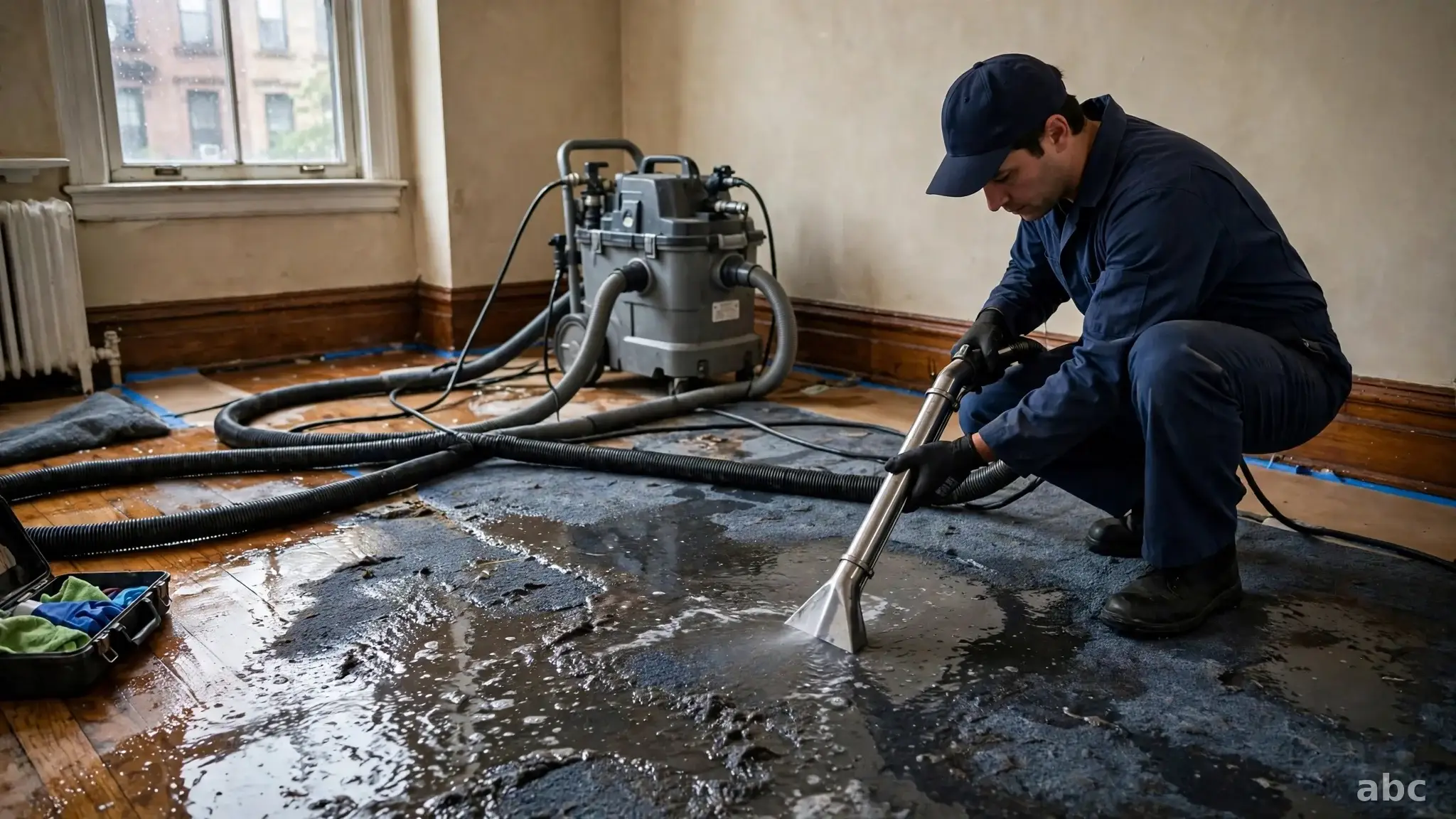
What Is Water Extraction?
You need water extraction whenever standing water is present — inches of water across a basement floor after a storm, a burst pipe's aftermath pooling through rooms, a failed water heater spreading across a utility area, or an overflowing fixture that ran while nobody was home. Even a thin layer matters: a saturated carpet pad holds gallons, and water keeps wicking upward into drywall until it is physically removed. If you can see water pooling or squelch across the floor, extraction is the job to request first.
Extraction is the opening move, not the whole game. Unlike Water Damage Restoration, which carries the job through drying, cleaning, and repairs, extraction focuses purely on getting the water out fast. And unlike a Water Damage Inspection, which only locates moisture, extraction removes it. Acting fast matters enormously here: water begins wicking into drywall and subflooring within hours, and the EPA notes mold can start growing on damp materials within 24 to 48 hours. The sooner pumping starts, the less there is to dry later.
| Method | Submersible pumps + truck-mounted extractors |
|---|---|
| When to request | As soon as water is discovered |
| Followed by | Structural drying with moisture checks |
| Availability | 24/7, including holidays |
What's Included In Water Extraction?
Usually included — the exact work depends on the provider and the damage.
High-Volume Pumping
Submersible pumps move hundreds of gallons per hour out of basements, crawl spaces, and flooded rooms. For deep standing water, pumping is always the fastest way to get the bulk out.
Truck-Mounted Extraction
For shallower water spread across carpets and hard floors, powerful truck-mounted extractors pull standing water and embedded moisture in a single pass — far beyond what any household machine can manage.
Basement and Low-Point Removal
Water always settles at the lowest point, so basements, sump pits, and sunken rooms get focused attention. The provider works methodically from the deepest water outward until no standing water remains anywhere.
Water Depth Assessment
Before pumping starts, the provider checks water depths across every affected area and identifies the water's source and category. Knowing what the water is and what it carries determines the right removal approach.
Contamination Screening
The provider notes whether the standing water is clean, gray, or black water — because the category decides the protective gear required, the disposal method, and whether sanitizing must follow the extraction work.
Removal Verification
After the visible water is gone, the provider rechecks floors and low spots to confirm nothing remains. Extraction is usually included as the first phase — the exact work depends on the provider and the damage.
Signs You Need Water Extraction
Visible Pooling Water
Any water you can see pooling on floors means extraction is needed — even an inch across a large room is many gallons.
Running Water Sounds
Hearing flow behind walls or under floors when nothing is running points to an active leak still adding to the problem.
Bulging or Dripping Ceiling
A ceiling that bulges downward is holding water above it. Stay clear — it can release suddenly — and call for extraction right away.
Safety: Stay clear — a water-loaded ceiling can release suddenly.
Soggy, Spongy Flooring
Floors that give underfoot or squelch when walked on are saturated through the pad or subfloor and need professional removal.
Sudden Humidity Spike
A sharp rise in indoor humidity with no clear cause often means hidden standing water evaporating somewhere in the building.
Water Seeping Through Foundation
Water pushing up through floor joints or weeping through walls after rain needs removal before it spreads across the whole level.
Seeing one of these? Call (800) 110-0003 now — a local pro typically arrives in 30–45 minutes.
How Water Extraction Works
- 1Assess Depth
The provider measures water depths, finds the source, and notes the contamination category so the right pumps and safety gear are used from the start.
- 2Pump Out
Submersible pumps tackle the deepest standing water first, moving hundreds of gallons per hour out of basements, crawl spaces, and flooded ground-floor rooms quickly and continuously.
- 3Deep Extract
Truck-mounted extractors then pull the remaining water from carpets, padding, and hard floors — reaching the embedded moisture that pumps alone leave behind in soft materials.
- 4Measure Moisture
With standing water gone, the provider takes moisture readings of floors and walls to map what still needs drying and hands off to the drying phase.
How long does it take? Extraction itself often takes a few hours for a typical home; severe flooding takes longer. Drying follows and usually needs 3–5 more days — extraction just clears the way.
Water Damage Risk Across New York
Why water extraction calls spike in certain counties — backed by FEMA and NOAA data.
County risk rating — FEMA National Risk Index, Dec 2025
County risk rating — FEMA National Risk Index, Dec 2025
County risk rating — FEMA National Risk Index, Dec 2025
County risk rating — FEMA National Risk Index, Dec 2025
County risk rating — FEMA National Risk Index, Dec 2025
Water begins wicking into drywall and subflooring within hours of contact, which is why extraction can't wait (Source: EPA).
Mold can start growing on damp materials within 24 to 48 hours (Source: EPA).
Service-area counties average 45.5 to 48.3 inches of rain per year, keeping basements and ground floors at regular risk (Source: NOAA).
Why Call abc For Water Extraction?
Extraction is a race against absorption — the faster standing water comes out, the less of it soaks into floors and walls. Calling abc connects you with an independent local professional with the high-volume pumps and extractors that household equipment simply can't match, 24/7.
Nights, weekends, holidays — a real person picks up.
Toll-free number. No charge to reach a local pro.
47 cities covered from one memorable number.
Connected with local pros who do the work.
Apartments, houses, offices, retail, restaurants.
Typical arrival window once you're connected.
What New Yorkers Say
Water Extraction Tips: What To Do (And Avoid)
Kill Power to Flooded Areas If Safe
From a dry location, switch off electricity to rooms with standing water. Never touch a wet panel or stand in water to reach a switch.
Don't Wait for It to Recede
Standing water won't meaningfully evaporate on its own — it soaks in instead. Calling early keeps a pump-out job from becoming an indoor tear-out job.
Keep Children and Pets Away
Standing water can hide electrical hazards, sharp debris, and contamination you cannot see. Keep children, pets, and everyone else clear of flooded rooms until the provider arrives.
Record When You Found It
Note the date, time, and water depth when discovered. Insurers ask for this timeline, and it helps the provider judge how long materials have been wet.
Move Rugs and Furniture Up
Lift area rugs, and put furniture legs on blocks or foil to stop staining. Getting belongings out of the water early is the easiest save you'll make.
Don't Wade Into Deep Indoor Water
Knee-deep water inside a building can hide stairwells, sump pits, and live electrical hazards you cannot see. If the floor isn't visible through the water, don't walk through it.
Don't Do This
- Don't use a regular vacuum on standing water.
- Don't wade through water near electrical outlets.
- Don't assume a wet floor is only surface-deep.
Standing Water Right Now?
Every hour standing water sits, it soaks deeper into floors, walls, and belongings — and the drying job grows. If water is pooling in your home, call now so a local pro can start pumping it out fast, before it spreads further.
Available In 47 New York Cities
Popular Right Now
Show All 47 Cities (A–Z)
Water Extraction Questions, Answered
Submersible pumps remove deep standing water first, then truck-mounted extractors pull the rest from carpets, pads, and hard floors. The provider checks depths and water category beforehand, then verifies removal afterward with a final walkthrough of every affected area on site.
For a small spill, yes. For inches of standing water across rooms, household machines can't keep up — they hold gallons while the job needs hundreds removed, and they can't pull water from saturated padding. Professional pumps and extractors work at a completely different scale.
A typical home pump-out takes a few hours; severe basement flooding can take most of a day. Timing depends on water depth, area size, and access. Drying follows extraction and usually adds 3 to 5 days — extraction is the fast first phase.
Structural drying begins — air movers and dehumidifiers dry walls, floors, and framing over several days while daily moisture readings track progress. Then comes cleaning and any needed repairs. Extraction clears the way; drying and restoration finish the job properly.
A local pro typically arrives in 30–45 minutes after you're connected, day or night. Standing water calls are treated as urgent since every hour of delay means deeper absorption into floors and walls — the provider confirms an ETA when you call.
Professional extraction is designed to protect flooring — it lifts water out rather than grinding it deeper in. Some already-saturated materials like swollen laminate may still need replacement afterward, but fast extraction gives every floor its greatest possible chance of survival.
Yes, if it covers a wide area. A thin layer across a whole basement is hundreds of gallons, and carpet padding underneath can hold far more than the surface shows. What looks minor often hides the real volume below it.
It can be — especially with active inflow, nearby electricity, or contamination. Even clean water becomes urgent fast as it wicks into walls and feeds mold within a day or two. When in doubt, call (800) 110-0003 and describe what you see.
Get the Water Out Fast
Standing water won't wait, and neither should you. Call (800) 110-0003 now and get connected with an independent local extraction pro — 24/7, anywhere in New York.
(800) 110-0003Sources & methods: how we research and verify everything on this site →